
Column by Sen. Jeff Zell: America's security depends on strong alliances in an increasingly dangerous world
The world is entering a more dangerous and uncertain era. Threats to the United States now stretch across Europe, the Indo-Pacific, the Middle East, cyberspace and the global economy.
Russia continues to threaten European stability. China is modernizing its military while pursuing dominance in critical technologies and industrial supply chains. Iran and its proxies continue to destabilize the Middle East. Terrorism, cyberattacks and disinformation create additional pressure by exploiting weaknesses without a single shot being fired.
In this environment, American strength cannot be measured only by the size of our military. It must also be measured by the strength of our alliances, the security of our supply chains and the resilience of the communities and industries that sustain our national defense.
America's security strategy must therefore rest on three pillars: credible military strength, resilient supply chains and alliances strong enough to share the burden of deterring common threats.
First, strong alliances remain one of America's greatest strategic advantages.
Alliances are more than diplomatic commitments. They distribute risk, strengthen deterrence and help ensure that no single country bears the full cost of defending the free world.
President Donald Trump deserves credit for elevating the issue of NATO burden-sharing and pushing allied governments to confront whether they were investing enough in their own defense. Germany is now at the center of that shift, increasing defense investment, rebuilding its defense industrial base, modernizing procurement, expanding weapons production and reducing its dependence on Russian energy.
That matters because a stronger Germany helps create a stronger Europe, and a stronger Europe makes America more secure.
The same principle applies beyond Europe. From Japan and South Korea to Australia, Colombia, Brazil and other trusted partners, the United States has a direct interest in helping allies remain secure, prosperous and resilient.
The National Guard's State Partnership Program is one example of how sustained engagement strengthens those relationships. South Carolina's partnership with Colombia, along with early partnerships involving Estonia, Latvia and Lithuania, shows how long-term cooperation can improve training, readiness, disaster response and regional security without requiring a heavy American footprint.
Second, military strength means little if America and its allies cannot secure the technologies, materials and resources needed to sustain it.
Semiconductors power everything from automobiles and smartphones to satellites, fighter aircraft, missile defense systems and artificial intelligence. A major disruption in the Indo-Pacific could quickly affect both the global economy and Western military readiness.
The race for artificial intelligence raises the stakes even further. Like the nuclear and space races of the twentieth century, AI will shape global power by giving leading nations advantages in intelligence, logistics, cybersecurity, military planning, productivity and autonomous systems.
China also holds influential positions across supply chains for rare earth minerals, battery components, pharmaceutical ingredients, industrial chemicals and other strategic manufacturing inputs. Trade remains important, but overreliance on strategic competitors creates vulnerabilities that can be exploited during periods of tension or conflict.
Agriculture and energy are part of this equation as well. The war in Ukraine showed how disruptions to grain exports, fertilizer production, energy supplies and transportation routes can ripple across the globe. Food security, energy security, technological leadership and industrial capacity are now inseparable from national security.
That brings these issues directly home to Sumter.
The growth of eVAC Magnetics gives our community a direct role in strengthening domestic manufacturing and securing supplies of rare-earth permanent magnets used in commercial and defense applications.
Shaw Air Force Base provides another critical link. Shaw's 20th Fighter Wing provides combat-ready airpower and airmen worldwide, while the broader Sumter region supports the transportation, maintenance, warehousing, emergency operations and military families that make readiness possible.
These examples reflect a larger truth. In the 21st century, national security is measured not only in tanks, ships and aircraft. It is measured in microchips, rare earth minerals, energy supplies, fertilizer, manufacturing capacity, logistics hubs and trusted alliances.
No nation, not even the United States, can meet these challenges alone.
America must continue to lead with strength. Our allies must invest seriously in their own defense. And communities like Sumter must continue strengthening the industrial and military capacity that supports readiness at home and abroad.
If we do those things together, the free world will not merely endure this dangerous era. We will shape it.
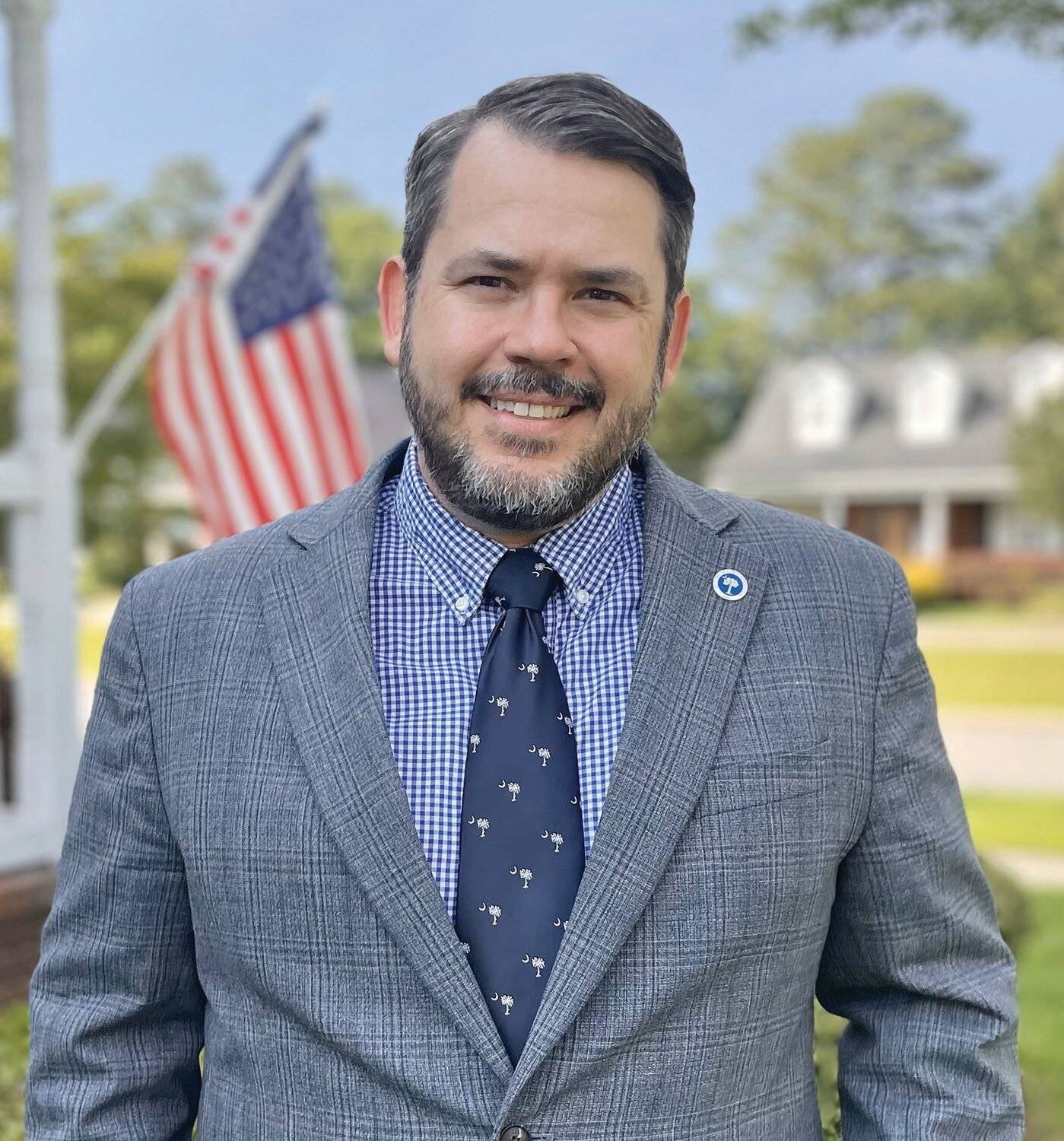
Sen. Jeff Zell, R-Sumter, represents South Carolina's District 36.