
How reading aloud shapes children’s emotional development
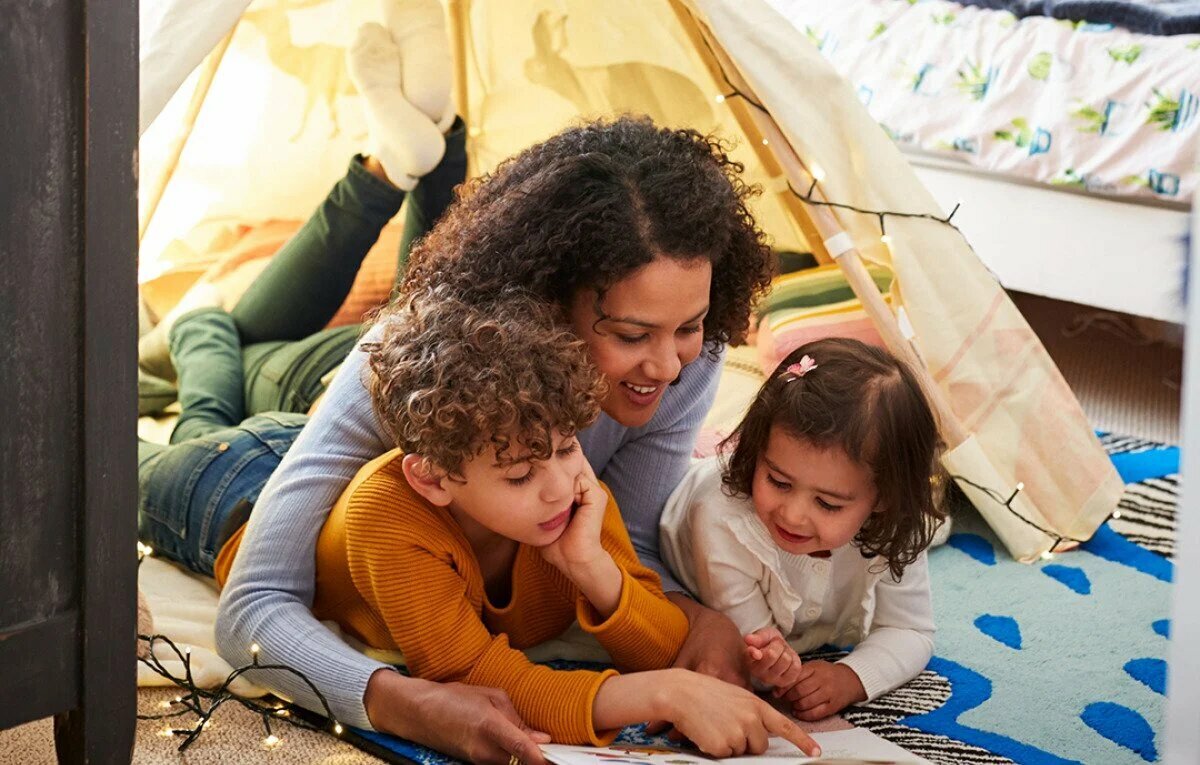
In an age of packed schedules and constant digital distractions, families often struggle to slow down and connect. Yet one simple habit continues to make a lasting difference: reading together. Reading aloud to children can be an accessible and powerful way for parents and caregivers to support emotional and cognitive development while also strengthening meaningful connections. But not all reading material is created equal — the content of what's being read matters just as much as the act of reading itself.
Aflac breaks down the cognitive, emotional and social benefits of reading to children, and why the stories you choose together matter.
What research says about reading aloud
Reading to children, toddlers and even babies is a beneficial and meaningful way to spend quality time together. That’s not just anecdotal; it’s a recommendation backed up by educators and the medical community.
According to the American Academy of Pediatrics, reading with children helps them build language skills, strengthen relationships with caregivers and promote brain development.
What is the difference between kids who are read to and those who are not?
According to a study by The Ohio State University, young children whose parents read to them five times daily will hear nearly 1.5 million more words by the time they turn five than children who weren’t read to at all.
“Kids who hear more vocabulary words are going to be better prepared to see those words in print when they enter school,” said Jessica Logan, lead author of the study and assistant professor of educational studies at The Ohio State University, when the study was conducted in 2019.
Reading as an emotional tool for children
Reading or being read to not only helps improve a child’s vocabulary and command of the language, it also allows for emotional development.
Listening to a story helps children identify and recognize emotions, process unfamiliar experiences and empathize with characters, according to Jean Piaget’s theory of cognitive development [1].
“Piaget has taught us that there are different planes of cognitive development, suggesting that the tailoring support is important and necessary based on the child’s age and maturity,” said Dr. James L. Klosky, Pediatric Psychologist at the Aflac Cancer and Blood Disorders Center of Children’s Healthcare of Atlanta.
He also noted that social and emotional skills develop progressively in childhood.
“Sharing is among the earliest social skills to be taught, whereas helping to clean up a classroom environment or making room for others at a table may be introduced a little later,” Klosky said.
“Learning and applying these skills are examples of ways in which children develop social and emotional intelligence. Based on the content of the book, parent-child reading time allows for opportunities to discuss best practices for managing friendships and other social relationships — or for explaining the importance of empathy or compassion — in a ‘low stakes’ context that is ripe for child learning.
Why stories matter during times of stress or illness
Reading can provide comfort, routine and a sense of normalcy during challenging periods. For those experiencing stress, reading has been found to be an effective way to reduce stress and is more calming than listening to music or taking a walk.
When children are diagnosed with a serious illness, the stress on families — and particularly on the children facing illnesses — is difficult to manage. The benefits of reading books during a prolonged, serious illness are threefold:
- Reading can offer children a distraction and mental escape, a way to immerse themselves in another time and place.
- Reading with a loved one can be comforting, providing a sense of normalcy and can help the child feel less isolated.
- Choosing a story to read can help give children a sense of control at a time when they may otherwise feel powerless.
Even babies in the NICU benefit from the calming sound of being read to.
How children’s books are supporting special causes
There is a growing trend in children’s publishing to raise awareness of or funds for specific causes, including child literacy and child health.
Many of these children’s books are directly aimed at raising awareness, in a kid-friendly way, about serious illnesses, such as cancer or sickle cell disease. They can also help ease the anxiety for children undergoing treatment and their families. Medical psychologists such as Klosky note that books connected to charitable efforts can have broader benefits.
“Reading is a well-established way to support children’s cognitive and emotional development,” Klosky said. “When a book is also connected to a cause related to children’s physical or emotional well-being, it can add another layer of meaning — both for families engaging with the story and for the communities those efforts support.”
Reading together builds connection beyond the page
Reading with a child every day can set them on the right path for cognitive development, emotional intelligence and acquisition of social skills. Just 15 minutes a day can make a big difference.
And while the habit of reading together can be powerful on its own, the stories chosen matter, too. Typically, books rooted in friendship, empathy and community give parent-child reading time a deeper purpose, sparking conversations that build lasting social and emotional skills.
Once you've chosen the right story, there are a few ways to take the practice of reading a step further:
- Try pausing at the end of a page and asking questions, sparking a conversation about what you’ve just read and what may happen next. This will keep children engaged and allow them to use critical thinking to predict how the story may end.
- Use fun props; gather a few stuffed animals around while reading about nature, or wear an accessory that matches a book’s theme, e.g., a cape for superhero stories.
- Choose books together; take your child to the local library, bookstore or online resource and choose books you will both enjoy reading.
Reading aloud continues to be a meaningful way to support children’s emotional development. As children’s literature evolves, some books serve a dual purpose: fostering empathy through story while supporting causes that reach beyond the page. Together, these stories highlight the enduring power of reading to connect, comfort and contribute to the broader community.
[1] Piaget, J. (1926). The language and thought of the child (M. Gabain, Trans.). Harcourt, Brace & Company. (Original work published 1923).
This story was produced by Aflac and reviewed and distributed by Stacker.