
Learning and the brain: The maggots of mechanism
"The opposite of life is not death, but mechanism."
- Iain McGilchrist, neuroscientist and philosopher
The maggots embedded themselves into the soft piled fleece of the campers' bright orange hoodies, which they wore, defiantly, against the hot days in late August - 2005 - when the afternoon rains and the relieving sunlight concocted a thick blanket of humidity in the southern Appalachian Mountains.
It was my first week as a wilderness therapy instructor, and minutes before I heard them screaming, I had been searching for leftover coals in the central campfire, hoping my breath would carefully push the ashes aside and reveal an orange nugget still burning from the night before. And since initiation rites exist in every human community, even the granola lovers of western North Carolina, I was also in charge of making the coffee for the other instructors. As a rule, it's best to have your coffee before de-maggoting campers in your charge. But the screams came just a little too early.
Hours later - after we had pulled the maggoty hoodie over the two girls' heads and picked a few maggots out of their long, unwashed hair and had them change into new clothes and then sent them back to basecamp for showers - we learned what happened.
Every week, we spent two nights at the same campsite; these were "layover" days, when a field therapist would hike out to the group and meet with the campers individually to assess their progress and then provide us instructors with goals for the following week. Convinced that bears and copperheads liberally roamed the woods at night, looking for victims, the two new campers decided that urinating in their sleeping bags instead of the designated latrine was a safer bet, which was, by any measure, a reasonable assumption to make for two girls who'd never camped a day in their lives. But of course, the flies set in during the warm afternoons of "layover" and the eggs must have hatched in the night and began their expedition toward the warm, damp clothing, spreading over the girls' bodies as they tossed and turned during those first nights of sleeping on the ground.
It is fear that keeps us rolling around in the maggoty pestilence of our own minds. "The human brain was designed [ ] to mislead us, even enslave us," argues journalist Robert Wright. And in this story, the campers' fear perpetuated a story in their minds, a story about how dangerous the wilderness can be and how much safer they would be to stay put, wrapped in their warm sleeping bags. While it made them feel safe in the short term, it was clearly not a sustainable solution to living in the woods for the next few weeks. It worked, until it didn't.
They needed a new story and a new set of skills, both of which required time, energy, movement - and disruption.
When our minds are plagued by fears, we often adapt to the world in negative ways. We live with a deficiency (or scarcity) mindset, according to humanistic psychologist Scott Barry Kaufman; this deficiency mindset "colors all of our perceptions and distorts reality" (i.e., the bears and copperheads multiply). Whether it's safety, food, love or respect, "the greater the deficiency of these needs, the more we distort reality to fit our expectations and treat others in accordance with their usefulness in helping us satisfy our most deficient needs." The campers felt unsafe and acted as reasonably as they could in that situation. Can we blame them?
We are reminded in the book of James (2:15) that Christians are called to meet these immediate needs: "If a brother or sister is poorly clothed and lacking in daily food, and one of you says to them, 'Go in peace, be warmed and filled,' without giving them the things needed for the body, what good is that?" When these needs are not met consistently, people struggle to self-actualize (i.e., meet their potential), which leads to transcendence - "Transcendence, which rests on a secure foundation of both security and growth, is a perspective in which we can view our whole being from a higher vantage point with acceptance, wisdom and a sense of connectedness with the rest of humanity." For educators, this means that until our students' basic needs are met, we will struggle to fulfill the sacred duty of our roles - to help our students become explorers of the world, constantly growing and learning.
What unfortunately happens too often is that the deficiency mindset leads to a life of "mechanism," and as Iain McGilchrist states above, mechanism is the opposite of life. We create routines, patterns (of thinking), ways of being, schedules, relationships, etc. that keep us safe and comfortable but remove the risk and reward of a life of exploration, a life of transcendence. G.K. Chesterton said "[o]nly dead things float with the current; live ones swim against it."
Human beings can walk the same pathways for decades and never look around them. As Henry David Thoreau confessed of this tendency in himself (a noted Transcendentalist!), "It is remarkable how easily and insensibly we fall into a particular route and make a beaten track for ourselves. I had not lived [at Walden Pond] a week before my feet wore a path from my door to the pond-side; and though it is five or six years since I trod it, it is still quite distinct."
Had I been a more experienced wilderness therapy instructor, I would have immediately ensured the campers had a "buddy" system in place for nighttime restroom needs, I would have taught them what to do if they saw a bear, and I would have taught them where copperheads were likely to be. In short, I would have addressed their safety concerns immediately. So, in a metaphorical sense, the maggots were really on me because I failed my campers.
All growth begins with disruption, an event that wakes us up to our mechanical and dead lifestyles (i.e., we cannot stagnate and wait for the maggots), and points us to the infinite horizon, the horizon that recedes before us on the journey - crossing rivers and scaling mountains and sometimes pushing through swamps - never to be achieved, but to be pursued. That's what great education does for students - it disrupts their self-deprecating narratives, it enlivens their passions, it asks them to go and live their questions. It also provides a portable tent and sleeping bag, a safe place where they can rest along the journey, but great education never asks students to stand still. The search for the lit coal beneath the ashes, discovery - about yourself and your relationship to others and the world - is the point.
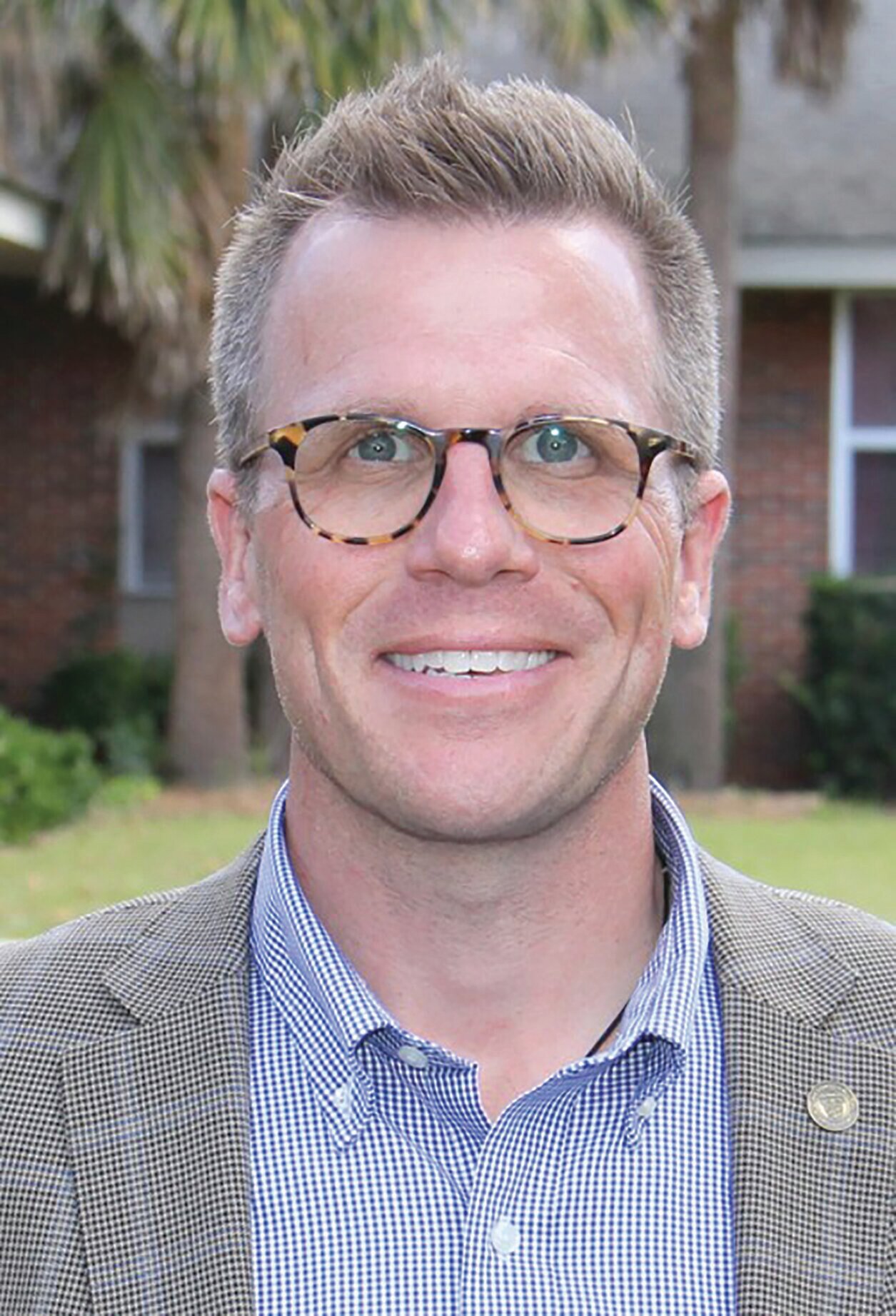
Kaneft is the headmaster of Wilson Hall in Sumter.