
Master Gardener training program begins again after 3 years
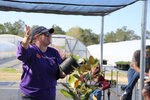
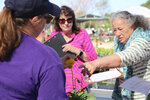
After a hiatus of about three years, Master Gardener classes are starting again this year in Sumter. The first cohort is ongoing, with its final exam in June, and the second cohort begins in July.
The program administered through Clemson Extension has about 70 members who meet once a month and have multiple programs throughout the year, like the Ask a Master Gardener program, which recently had a booth at Art in the Park. They also showcase what they do and sell irises at the Iris Festival in May every year.
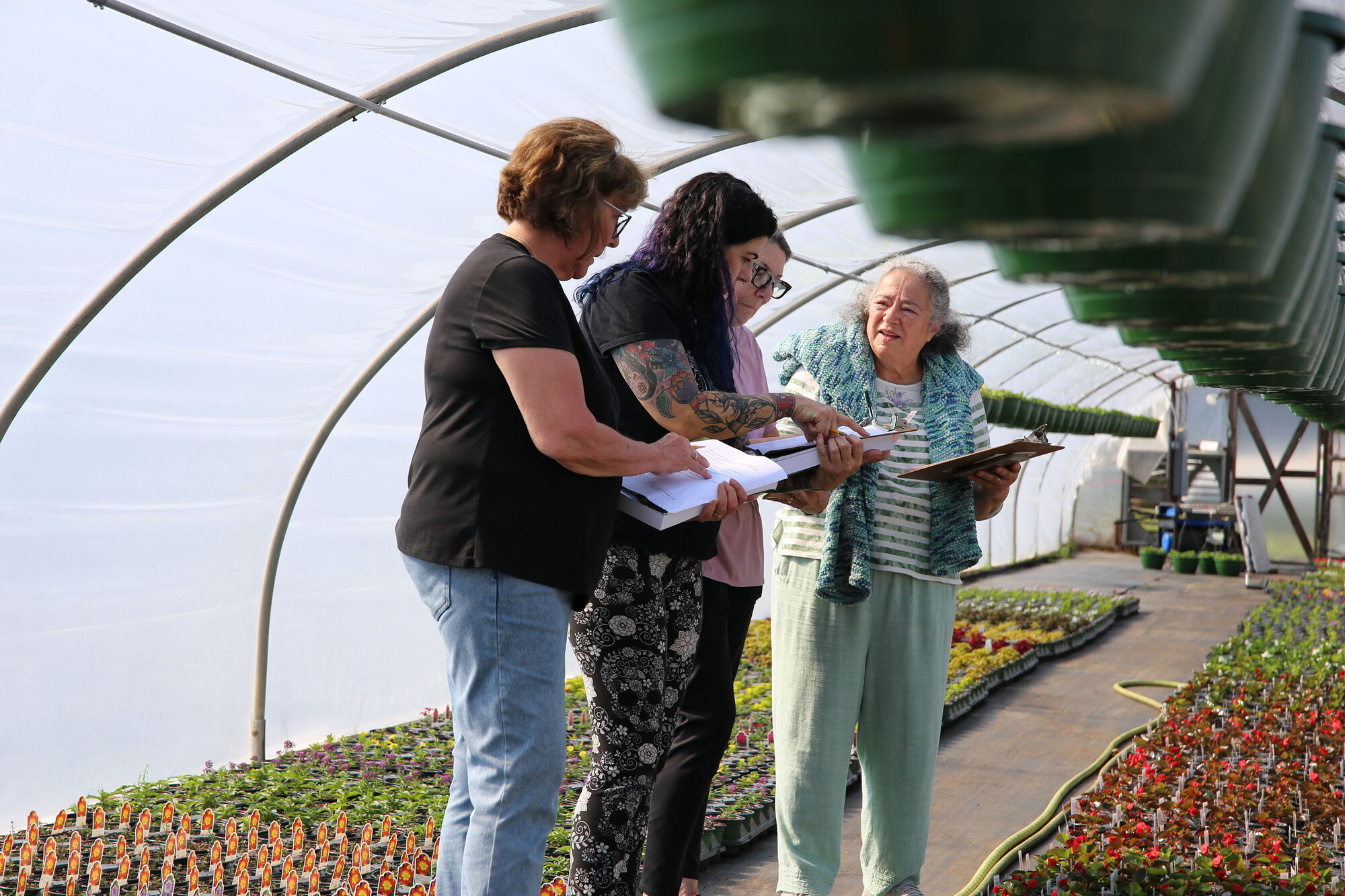
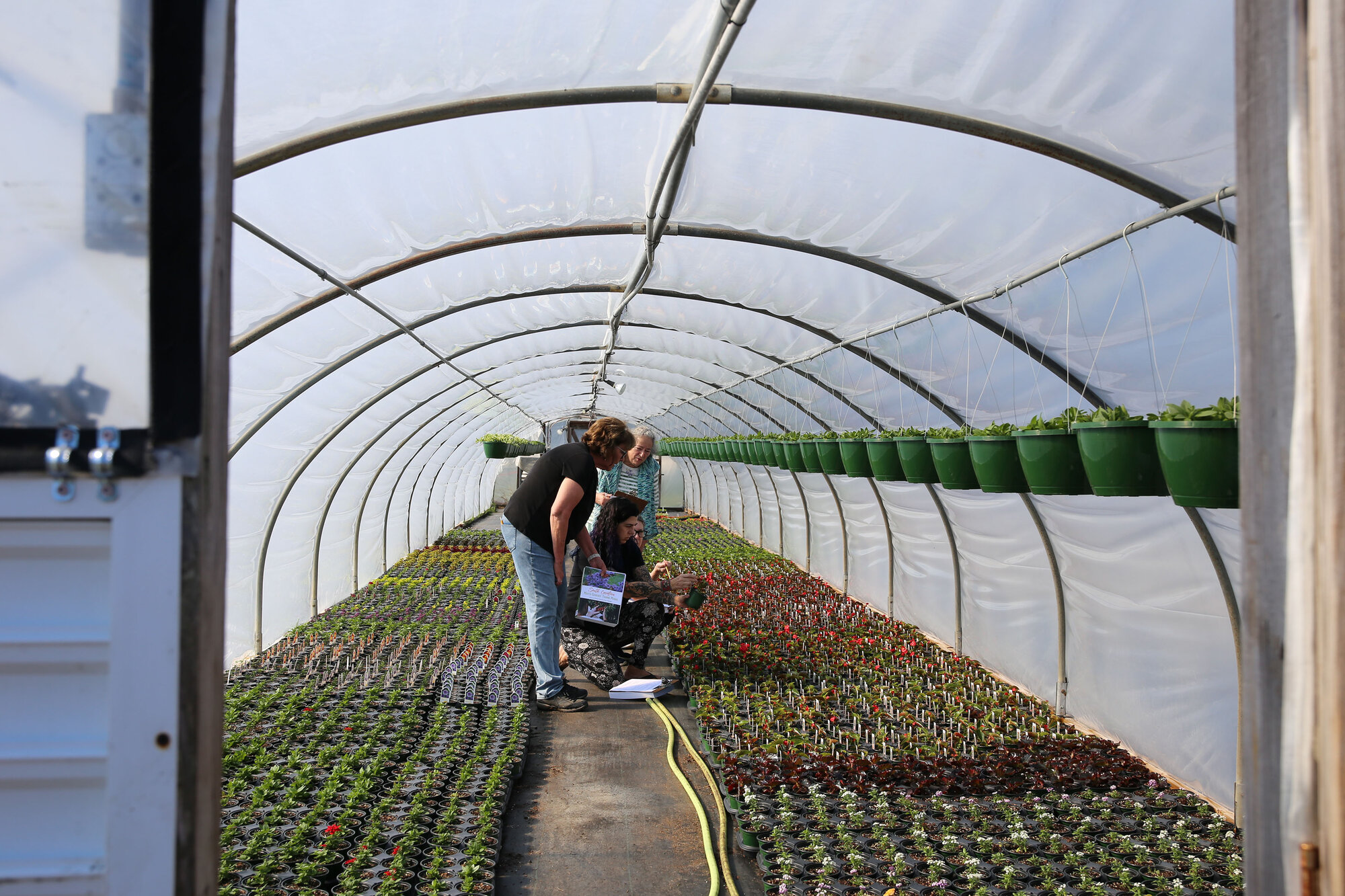
In her second week in the Master Gardener program, Lynne Maroney said learning about soil types and how they retain water was a highlight and said on her way to B's Nursery for a class excursion, she was eyeing clover and thinking about how it can be nitrogen fixing and thus reduce the need for fertilizers.
"I'm retired now, so I'm hoping I can use the skills that I'm learning from this Master Gardener program to better my community," she said.
"If I wanted to be with my dad, I'd be working outside in the yard," Maroney said about growing up on a farm in Darlington, where the family bought meat but grew all their own vegetables as well as tobacco. Now, she's joined the Master Gardener training program.
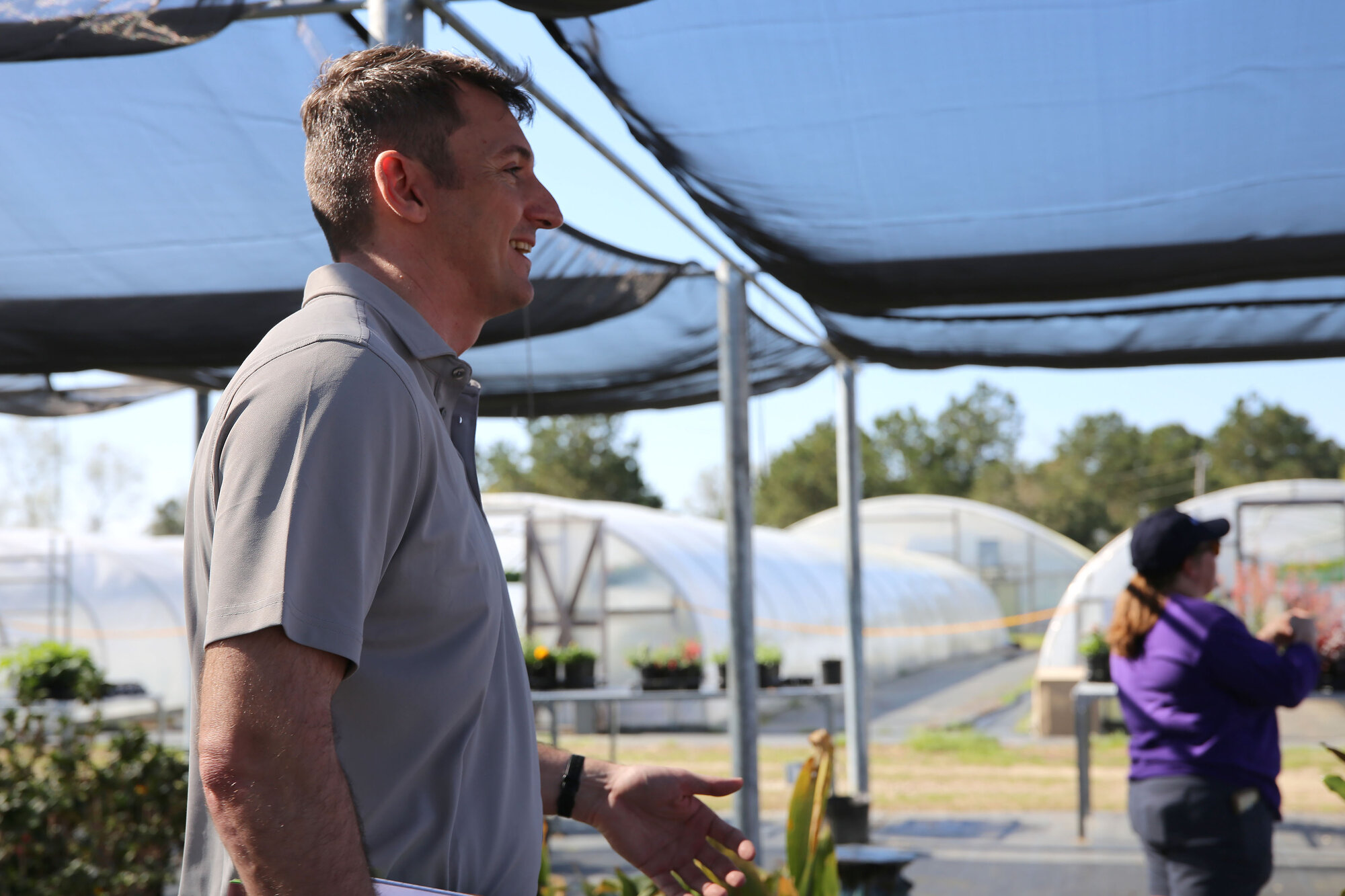
Bradley Secraw is consumer horticulture agent with Clemson Extension's Sumter, Clarendon and Lee offices after relocating from Oklahoma and starting his current role in November. He said many people in the Master Gardener class are transplants as well. He assisted with the Master Gardener program in Oklahoma, helping with the "interns" who did 40 hours of educational service.
Secraw said that while some of the knowledge they teach can be attained through online and individual research, the Master Gardener training program is condensed, all in one and application-oriented, intended to train them for various situations with hands-on learning and teaching opportunities.
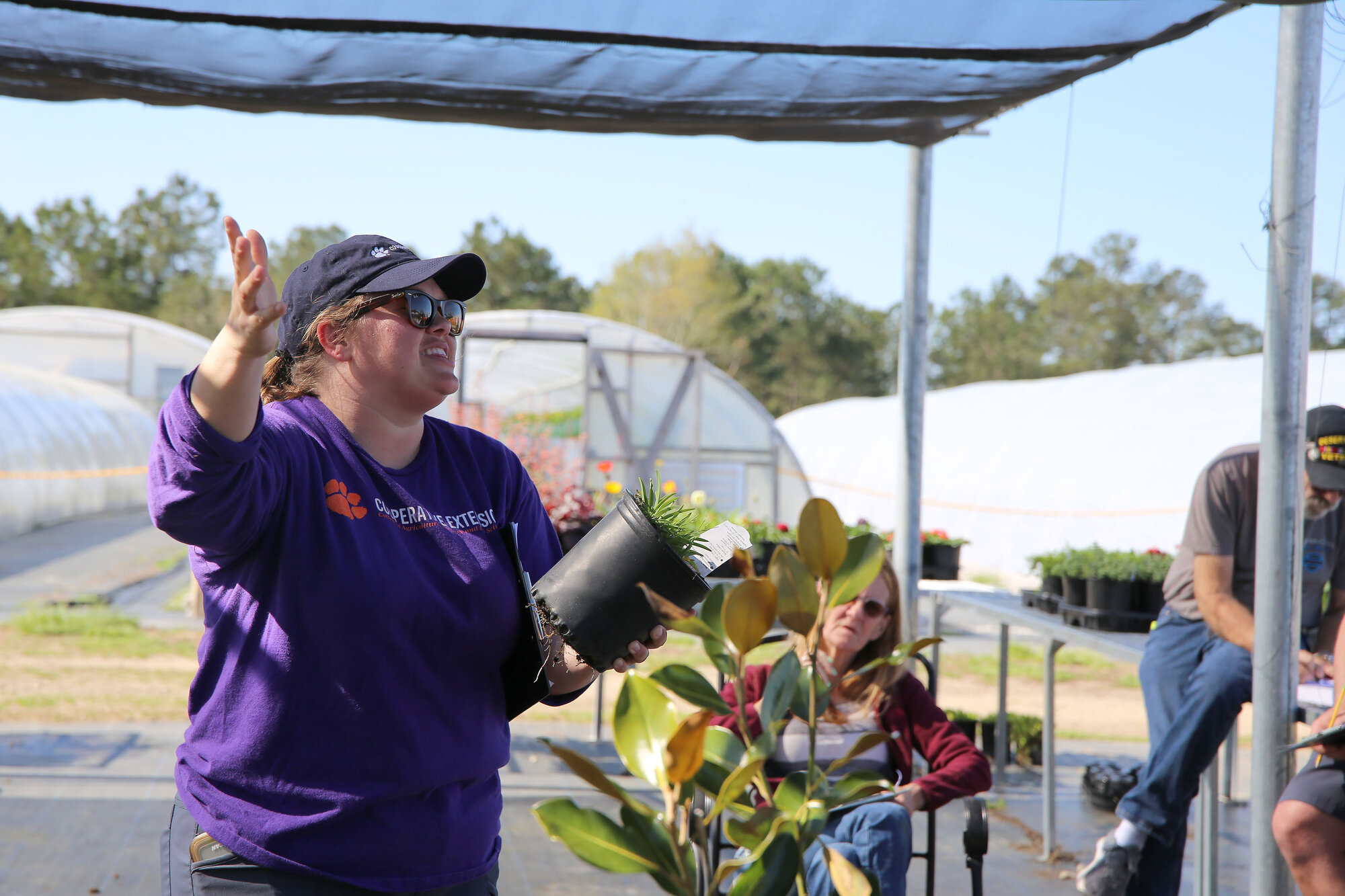
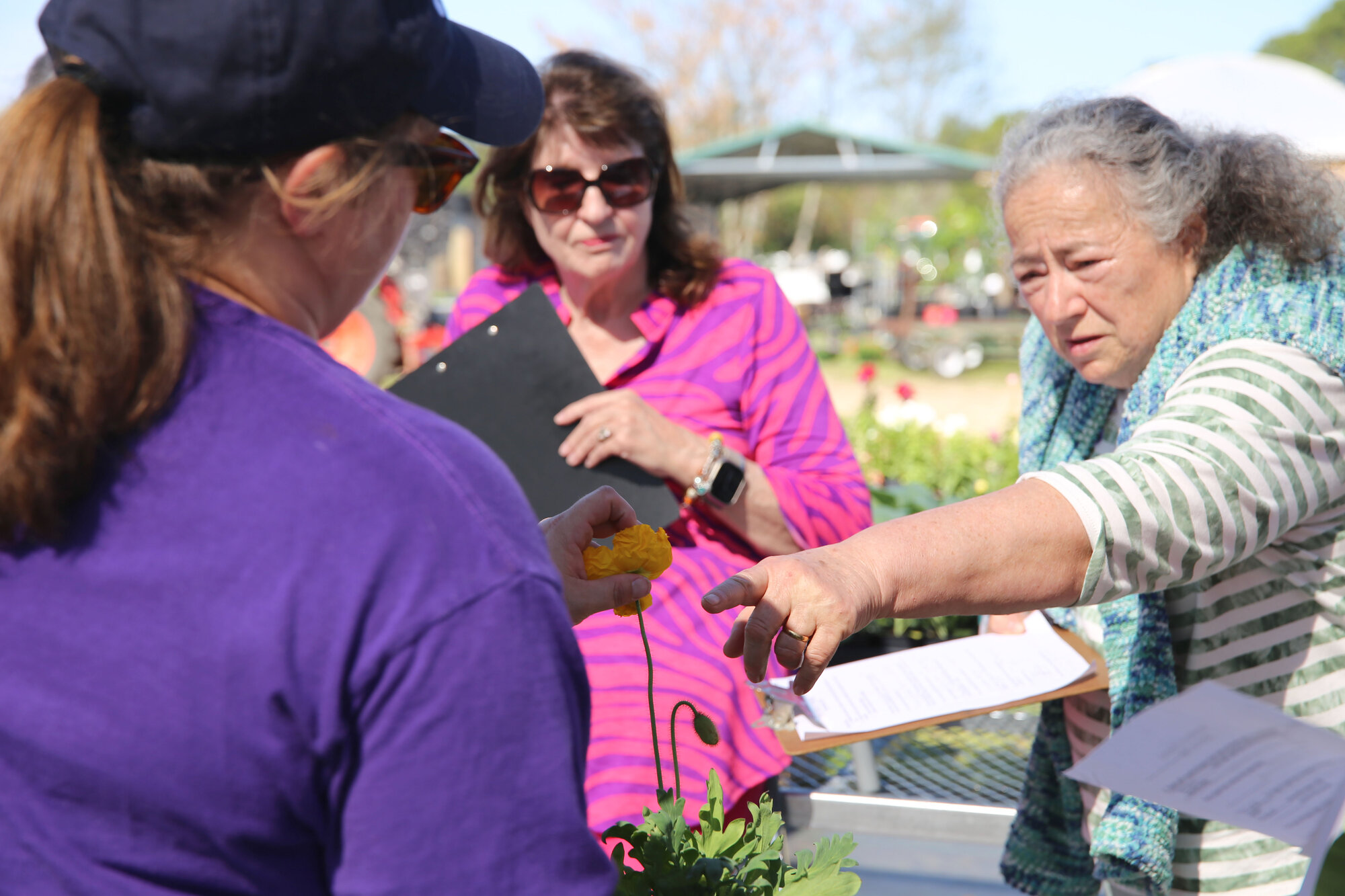
First for trainees is the classroom portion with 40 hours of training that includes excursions - such as the one to B's Nursery recently with hands-on demonstrations. There is curriculum and quizzes for participants to use on their own time; at B's Nursery, they collaborated to identify plants that matched characteristics listed on a scavenger hunt, then convened as a group to discuss answers and get more context from Carmen Ketron with Clemson Extension.
One activity Secraw is interested in walking participants through is appropriate soil sample measures and said they do many different activities.
"Part of it is to keep it interesting," Secraw said about the hands-on activities and excursions. "We definitely want to make sure that this is a very unique program."
Once the classroom part is complete, participants are known as interns, and the next step is 40 hours of volunteer service during a year. Those hours can be with the extension office answering questions and helping with projects such as with nonprofit collaborators, community gardens and school gardens.
"More experienced Master Gardeners that are with the association that's local here serve as mentors for the new interns as well," Secraw said, "so that helps them bridge that gap."
Secraw said it can be intimidating to answer questions from people as someone with a Master Gardener label and the high expectations that come along with it.
"In Extension, in general, we're used to getting people's problems - and so one person's once-in-a-lifetime problem I may have heard five times this week," Secraw said and added that Master Gardeners get approached in this way as well.
Jan Hilton, the chief of the Ask a Master Gardener program, said, "When people find out you're a Master Gardener, they go, 'Oh, you're a Master Gardener - you must know everything!' and that's not the case at all. We have very knowledgeable people on a variety of subjects, but I tell people, no, I don't know everything, but I know where to find most answers. That's what we're about." If personal experience or formal education don't cover a question, the Master Gardeners can find Clemson resources and science to answer most things.
Secraw said the Extension Office is an education resource for the public, and the Master Gardeners Association is an ally in that. While the Master Gardeners Association is technically separate from Clemson and manages its own finances, the relationship between the two is close, and Master Gardeners represent Clemson in the community through volunteering. They often direct people toward Clemson for horticulture and farm specialists, as Master Gardeners don't consult for professional or commercial farmers.
Pat Sakole is the president of the Sumter Master Gardeners Association, and he recruits speakers for the group's monthly educational program, who have ranged from beekeepers to engineers and educators with University of South Carolina.
"We open it up to any possibility that it's generally related to gardening in some aspect or another, environmental or water or something, but it's a pretty diverse group," he said.
Ketron has worked with Clemson Extension for more than four years and about 15 years at different organizations in South Carolina.
"I love to educate people on topics that can help them make the state, our world and their environments a little bit better," she said.
She said things are constantly changing with new plants - edible gardens and raised bed gardens have become mandatory topics because of a surge in popularity in recent years, as has more resilient and weather-wise gardening techniques.
"Now a lot of people want their landscapes to do double and triple duty. It's not that I just want a pretty garden - I also want it to be a workhorse for sustainable stormwater management, I want it to be a wildlife habitat; I want it to do all the things, and so being able to redesign how we educate about the plants, how we design landscapes, that has changed to new desires and it is honestly for the better, so that's exciting."
Secraw said he is excited about his new role with the Extension office and working with the trainees.
"It's always great to see people excited about gardening. A lot of these Master Gardeners have done things that are either in agriculture their entire life or agriculture adjacent. One of our Master Gardeners currently is a retired biology teacher. I have another one who's going to be teaching the turf section because I believe he is a retired high school agriculture teacher."
He looks forward to being exposed to the knowledge and experiences of participants as well.
"They're gonna know things that I don't know, and I know that's going to happen because most of them have been on the planet longer than I have," he said.
Master Gardeners also coordinate multiple community gardens - two more are being put together in Sumter, with one across from the South Sumter gym that will have an after-school program for youth that Sumter City Councilman Calvin Hastie helped coordinate.Secraw is looking into the soil composition of the area now. The other is Shiloh Community Garden across from St. John's Elementary on Narrow Paved Road. Those are in collaboration with 4-H.
Program participant Maroney talked about how gardening could help restore relationships that may have deteriorated during the pandemic.
"I would like to see in my community some of that fracturing heal so that people can get back together," Maroney said about how COVID-19 changed relationships. "I have found that people are fascinated by children [and] that brings people together - plants will also bring people together."
If you'd like to be notified of the next Master Gardener Volunteer Training Course, complete the interest form at https://tinyurl.com/ye7kdcay. This will allow the local coordinator to contact you when the next course registration is available.