
Past is Present, presented by Sumter Museum: President Sewell reflects on Morris College's 118 years of opening doors to the community, commitment to making a difference





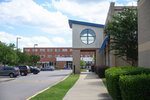
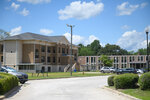

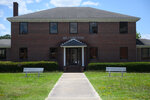
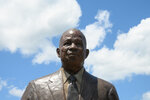






Since their inception, historically Black colleges and universities have served as America's front porches of opportunity, welcoming students into futures that previous generations could only imagine - Sumter's Morris College is one of the few.
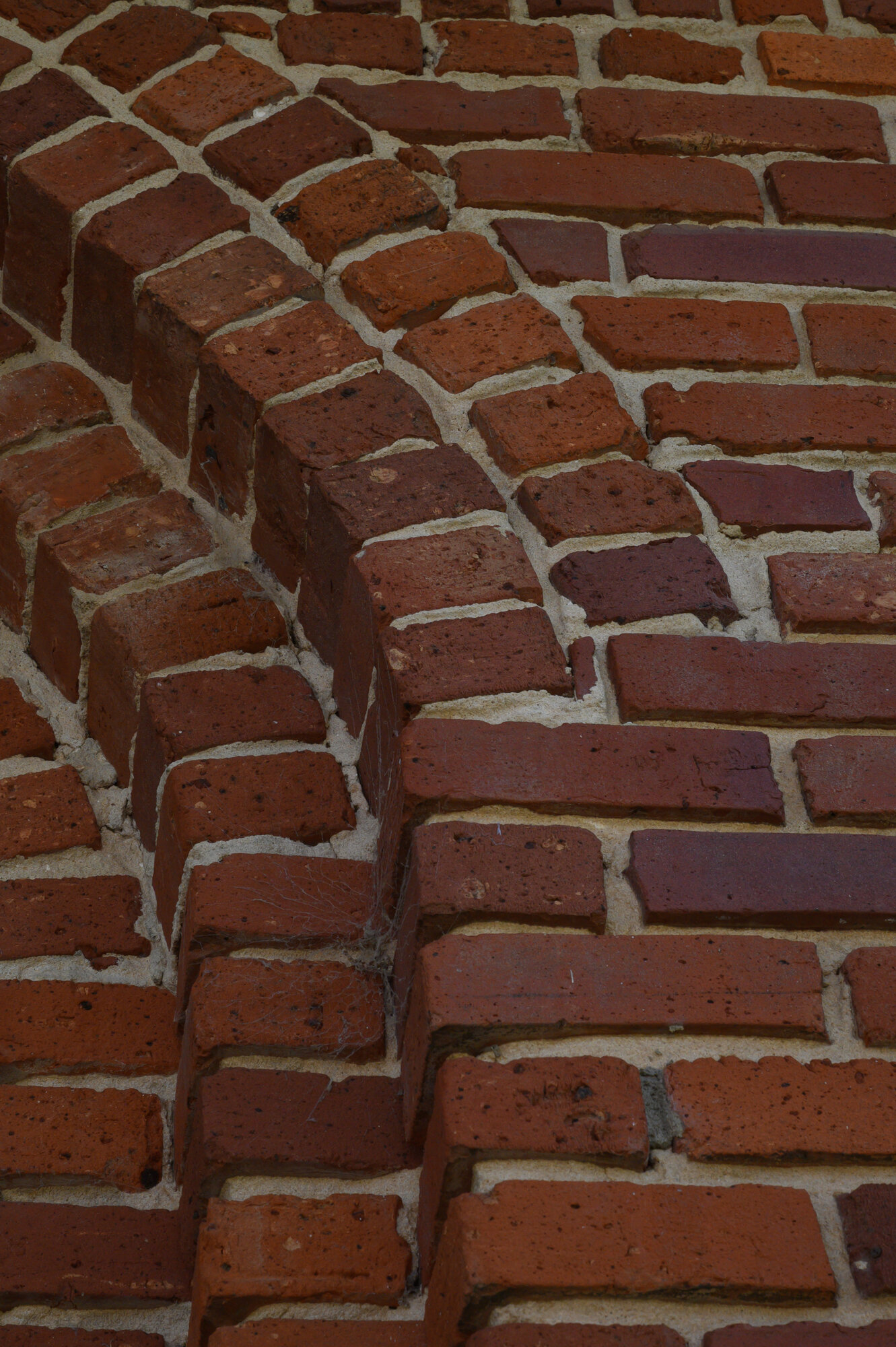
There are worn hollows in the stair tread, softened by the century of feet finding their way to class, the chapel, the cafe, to opportunity. The wooden railing nearby carries a fresh coat of paint, but beneath it lives the memory of students who pulled themselves, hand over hand, into a future that knew no bounds, only endless possibilities.
For 118 years, Morris College has been a "front porch" where generations have gathered before stepping into the wider world to spearhead change and inspire the minds of tomorrow.
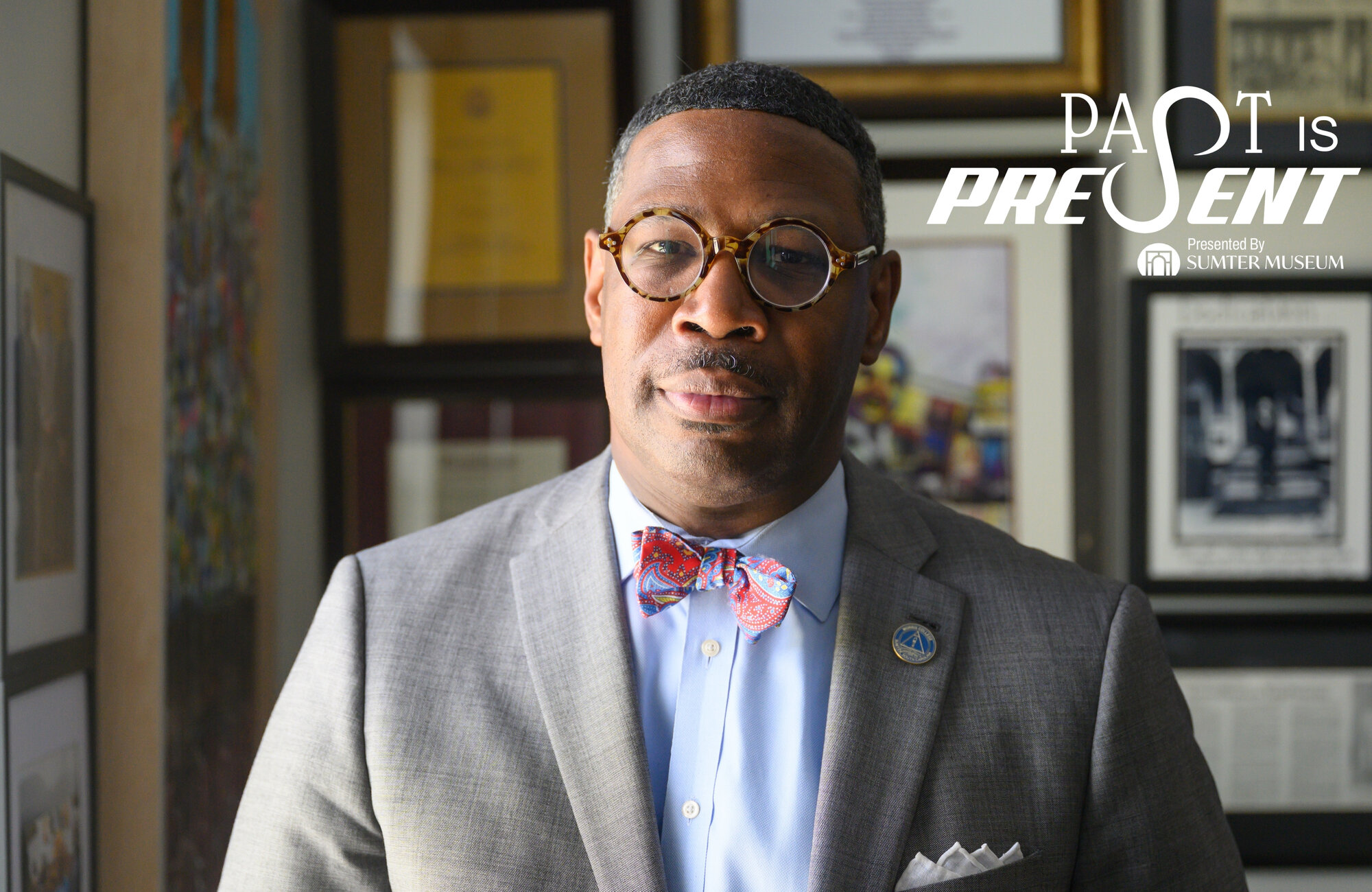
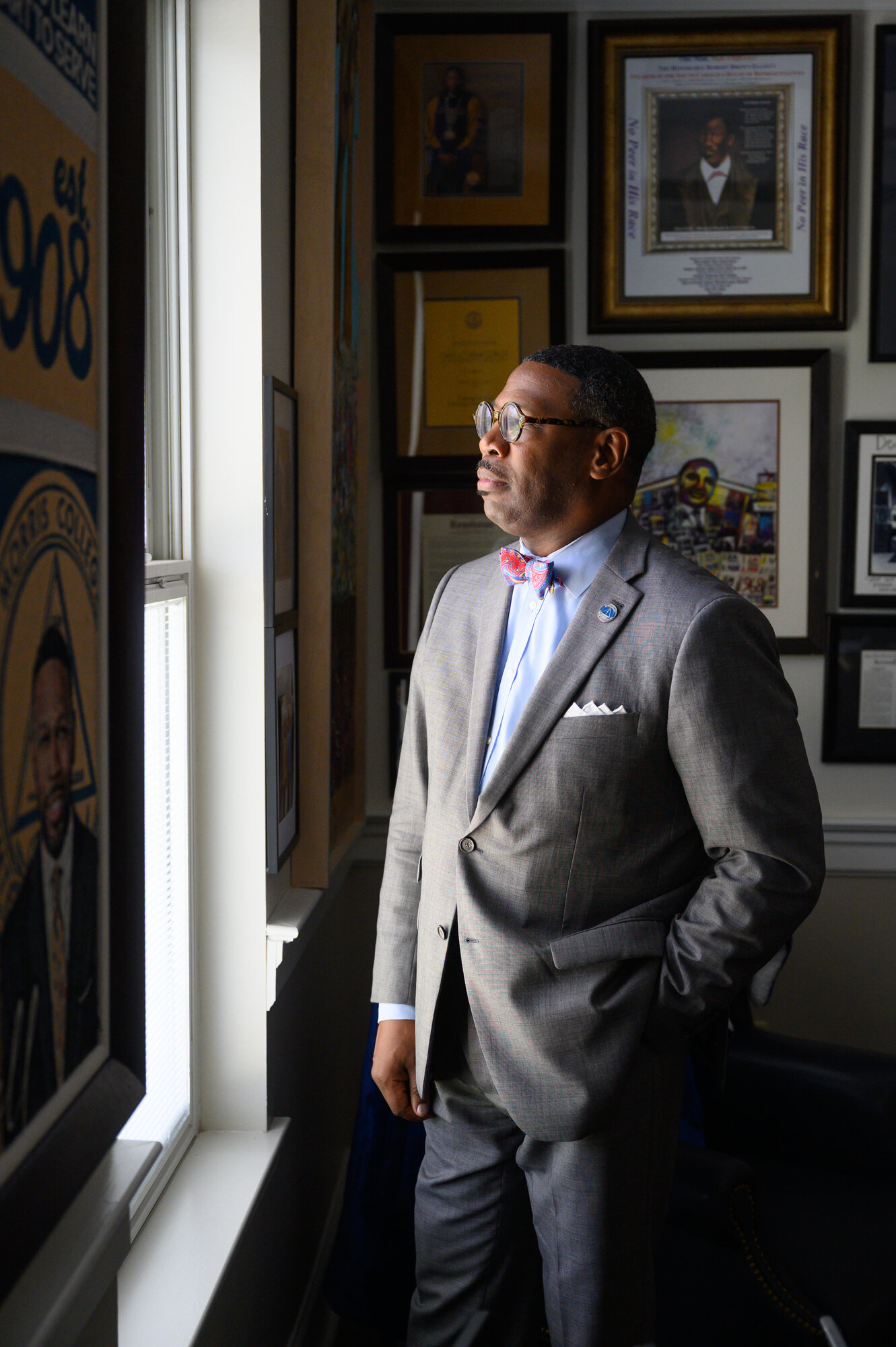
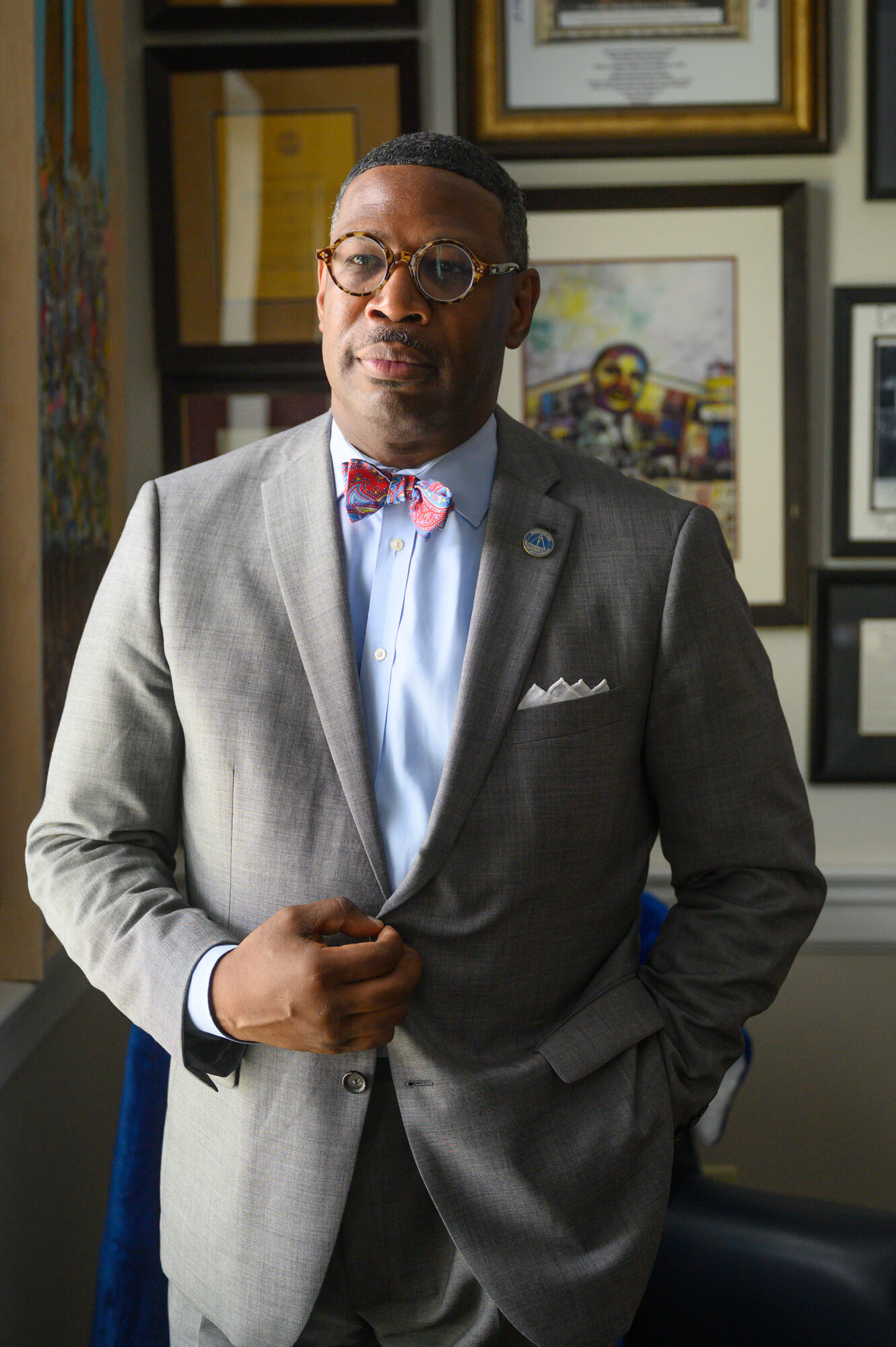
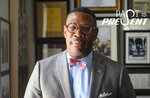
Dr. Said Sewell, the college's 11th president, understands that kind of history deserves to be shared beyond its buildings.
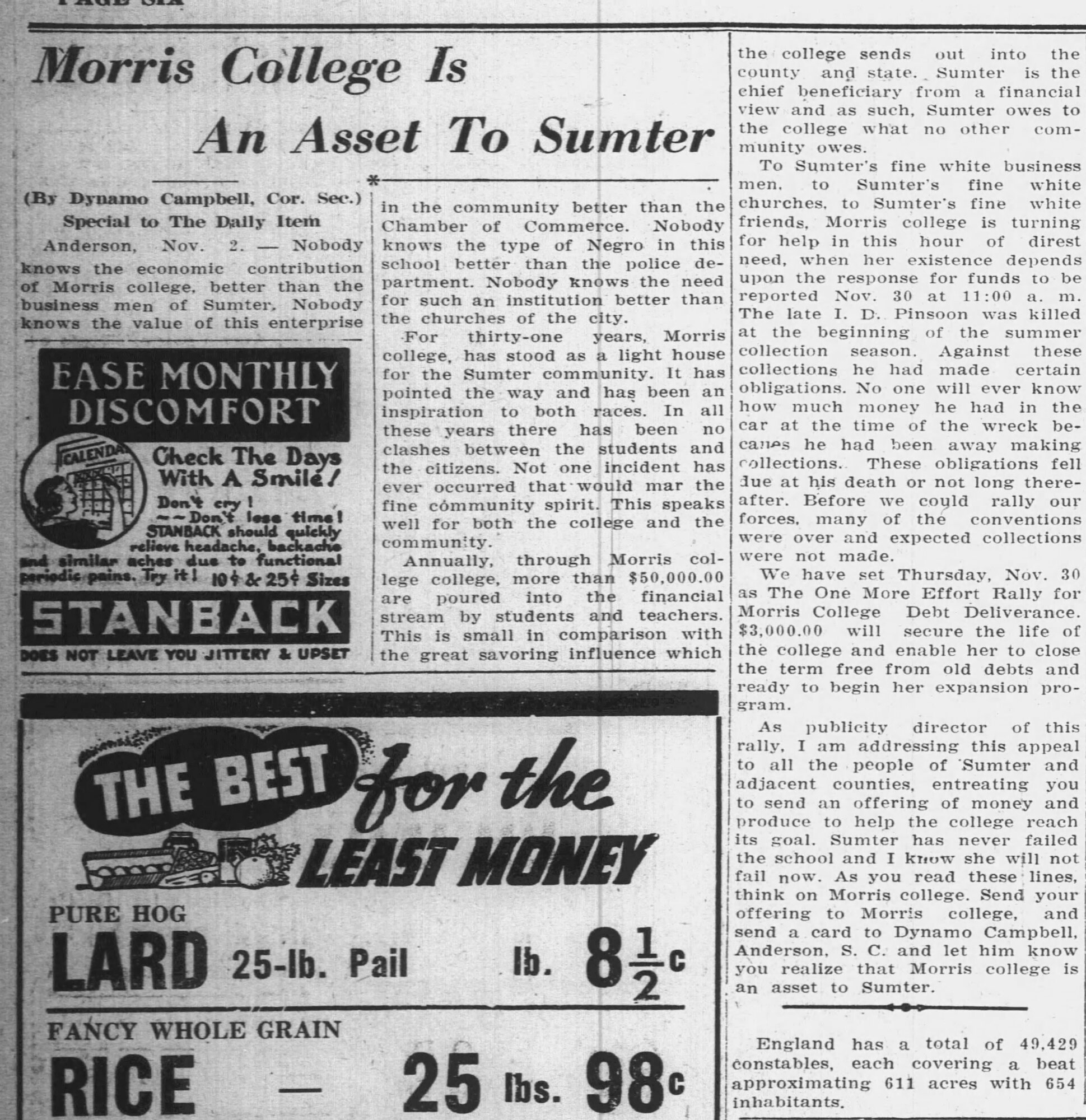
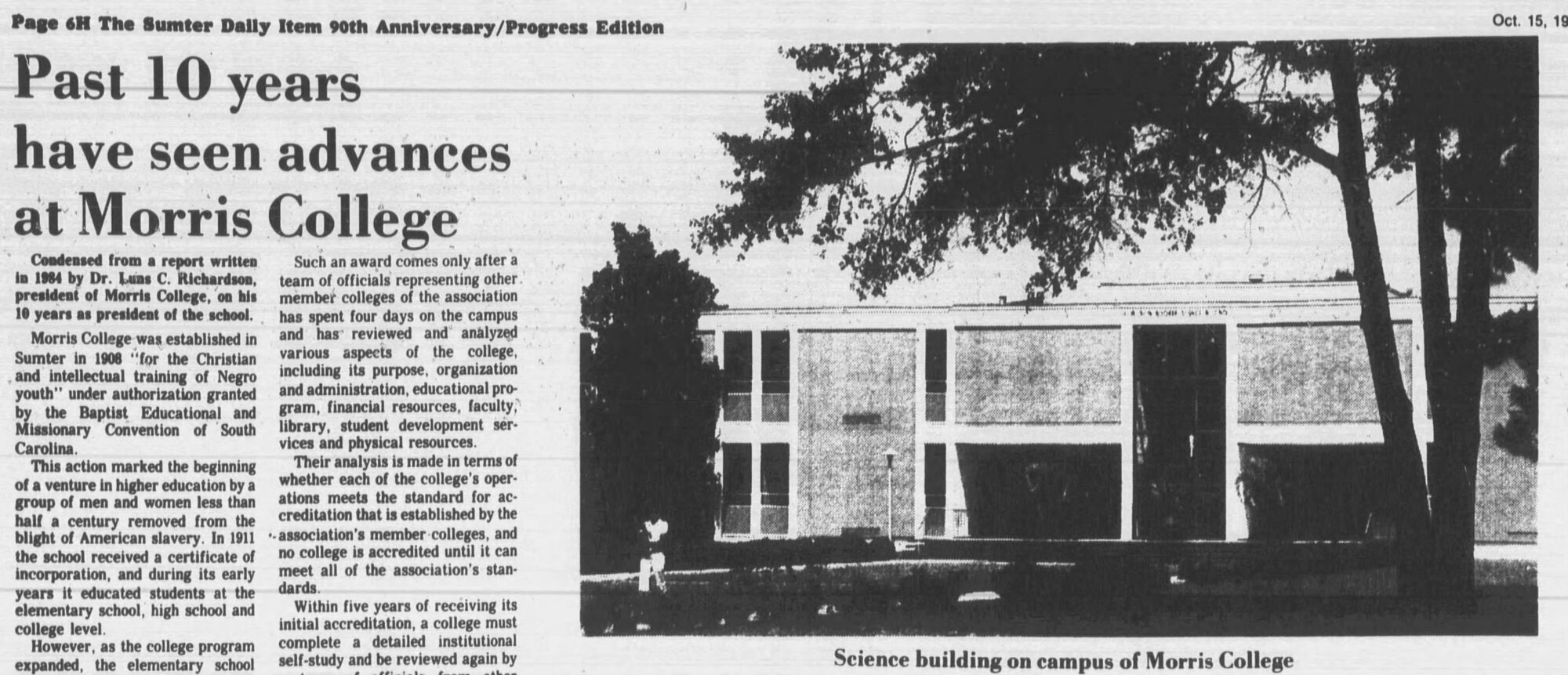
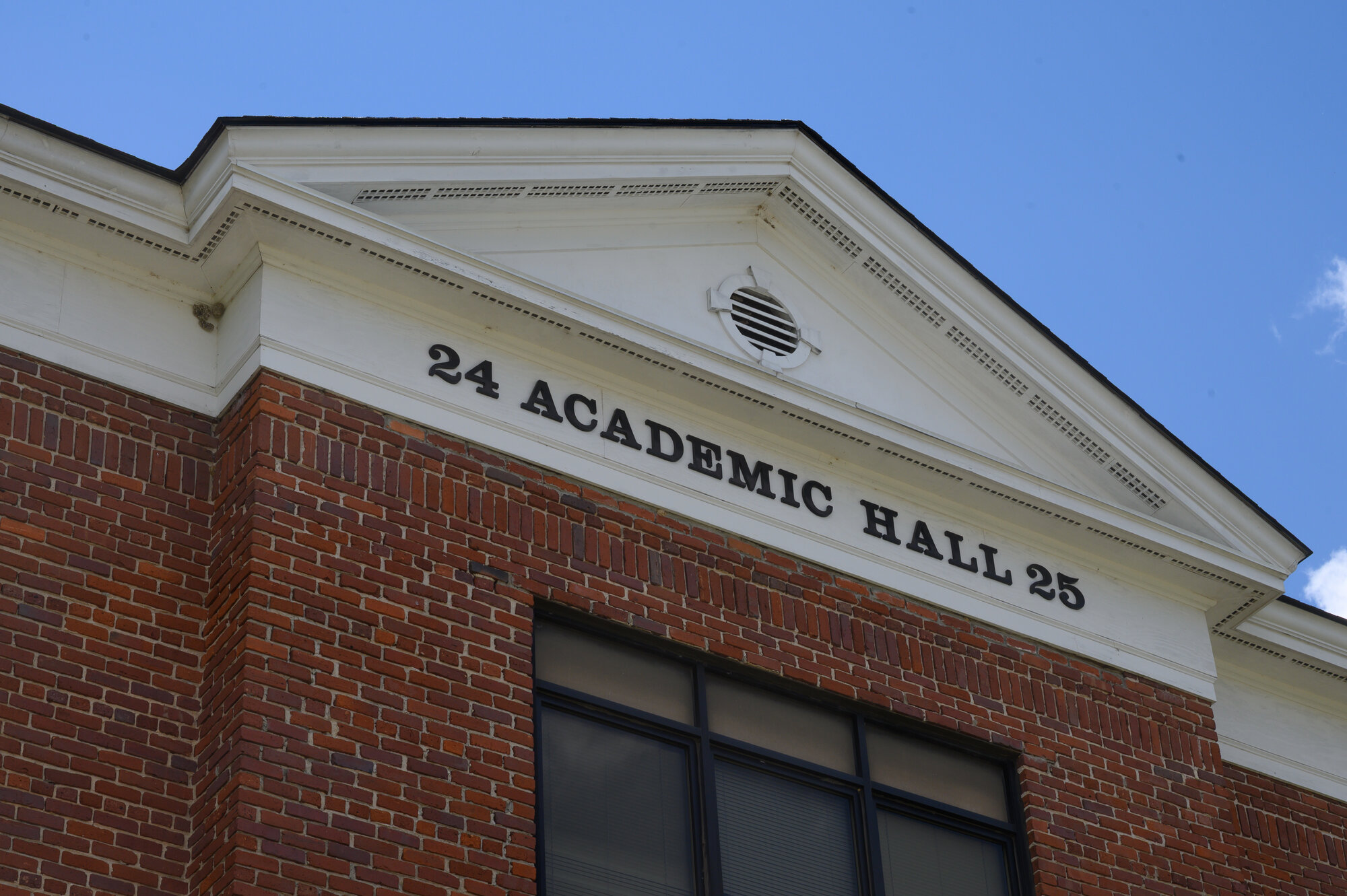
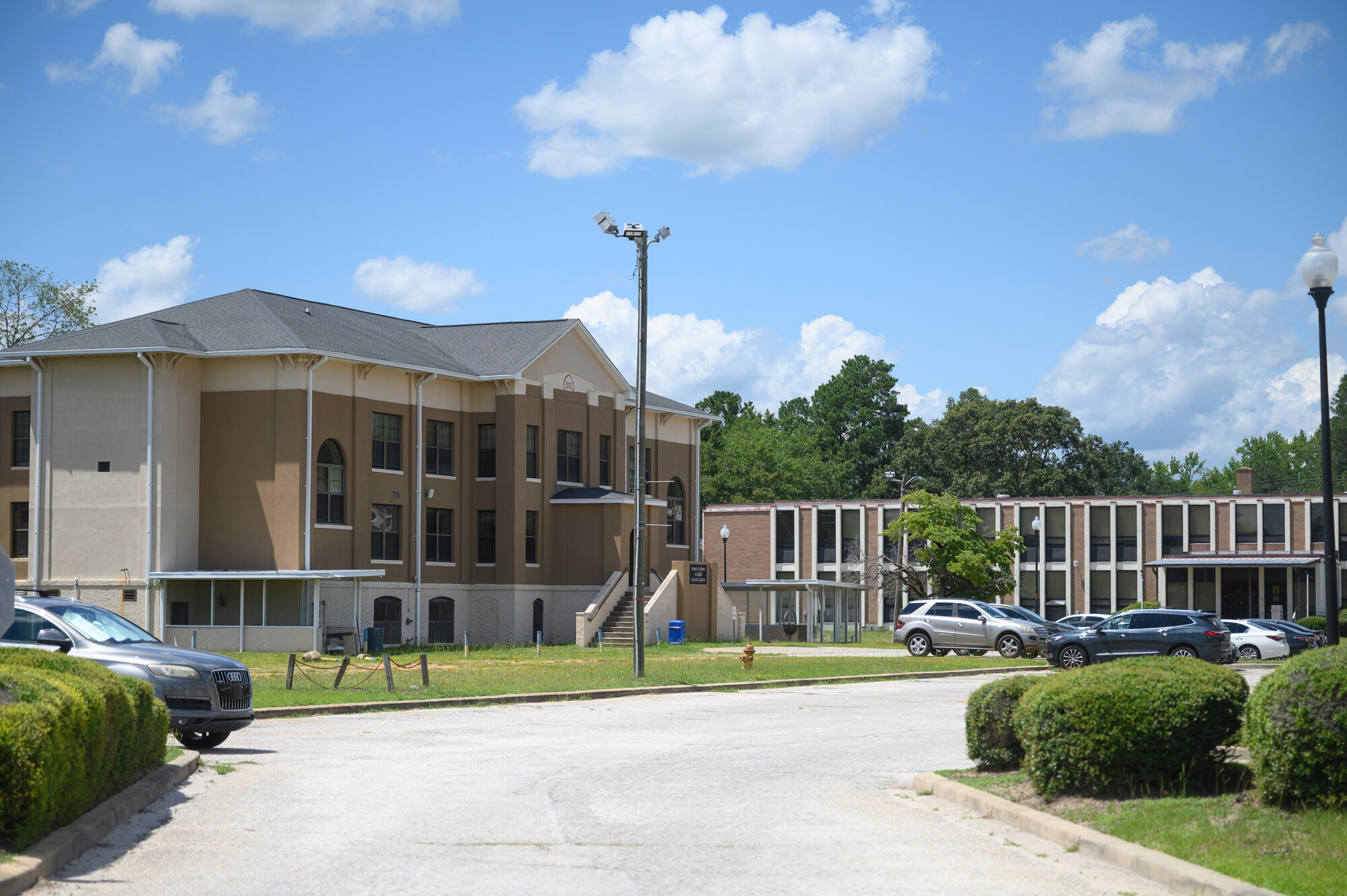
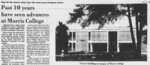
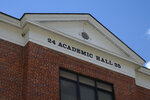
Morris College has shaped generations of leaders for decades. Founded in 1908 through the vision of Black Baptist men and women at First Baptist Missionary Church in Sumter, the college became the pinnacle of what a community could build when opportunity was limited but determination was abundant. Early supporters sold chicken dinners, donated eggs and harvested crops to feed students and sustain the institution. Students, faculty and staff helped construct some of the campus' earliest brick buildings with their own hands, including Academic Hall, which still stands today.
The college once provided schooling on the elementary, high school and college levels. The college curriculum included programs in liberal arts, in "normal" education for the certification of teachers and a theological program. It operated as a junior college from 1930 to 1932 and resumed its full four-year program in 1933.
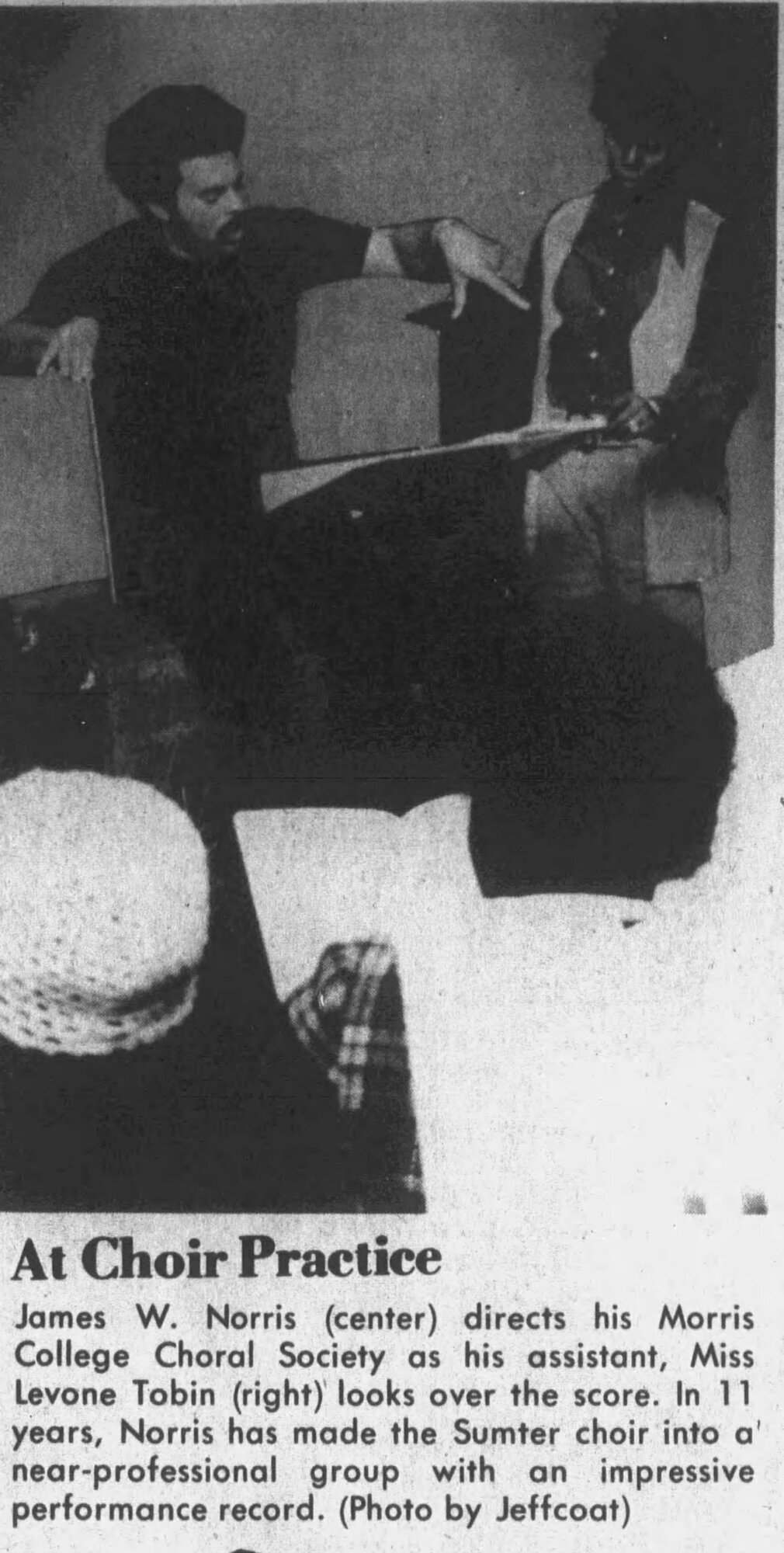
Morris has a special place in the hearts of South Carolinians, both domestic and abroad. It has been a center for training ministers in pulpits and teachers in schools across the country. Graduates have added to the ranks of professionals and businessmen, becoming historic and iconic figures who grace textbooks, TV screens and publication pages today. Many communities and state agencies have used the facilities of the college to carry out programs of general welfare and social uplift.
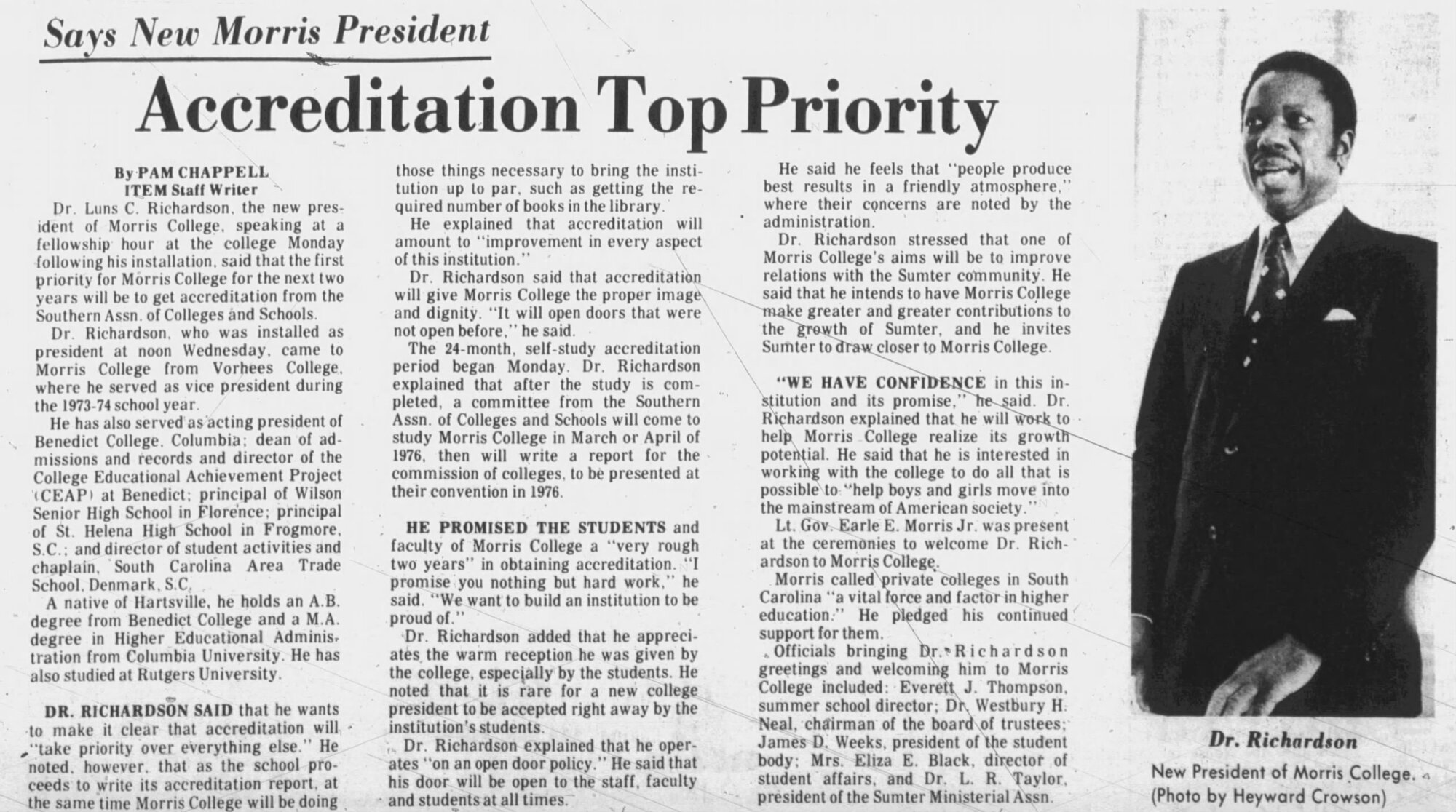
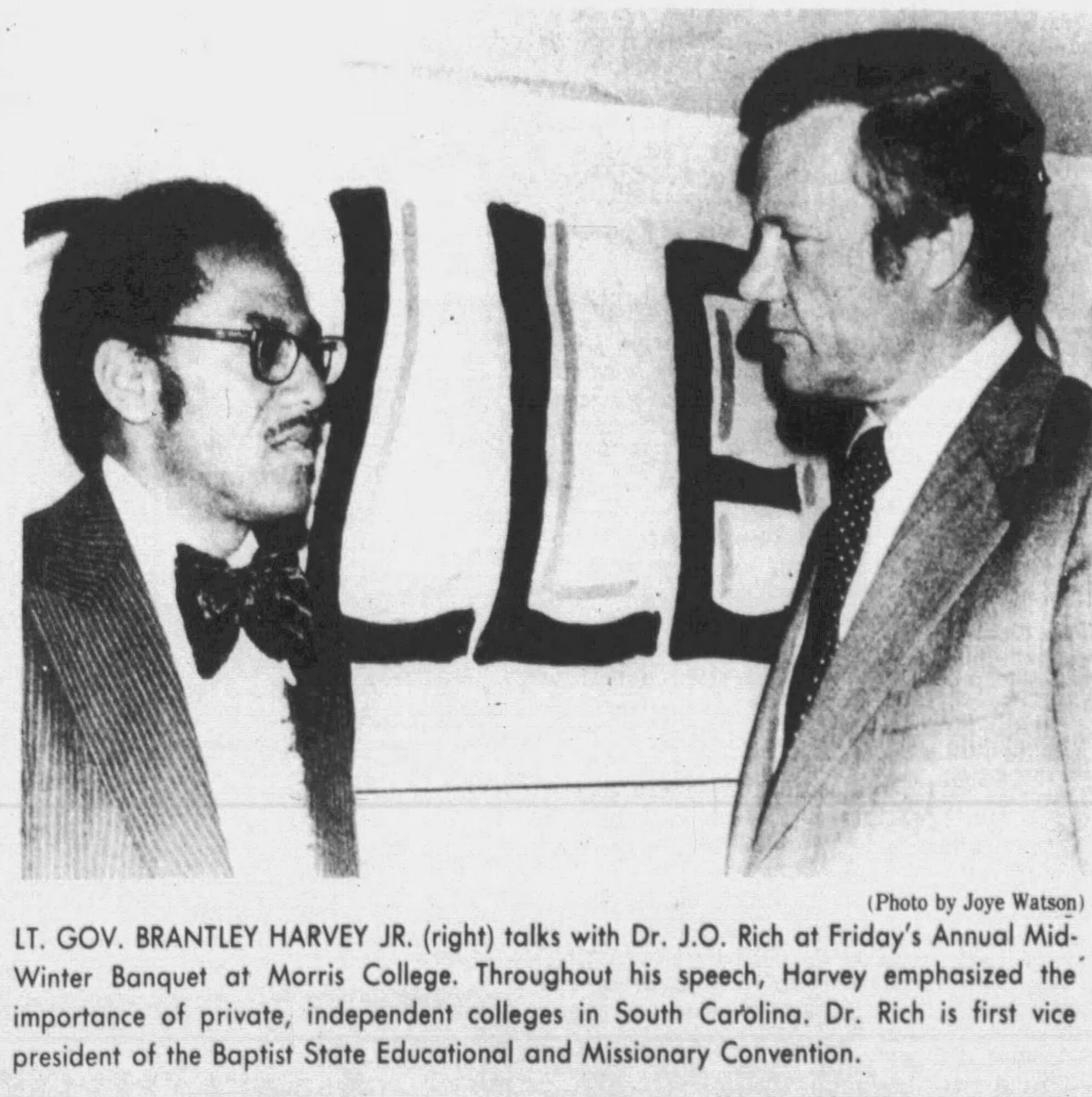
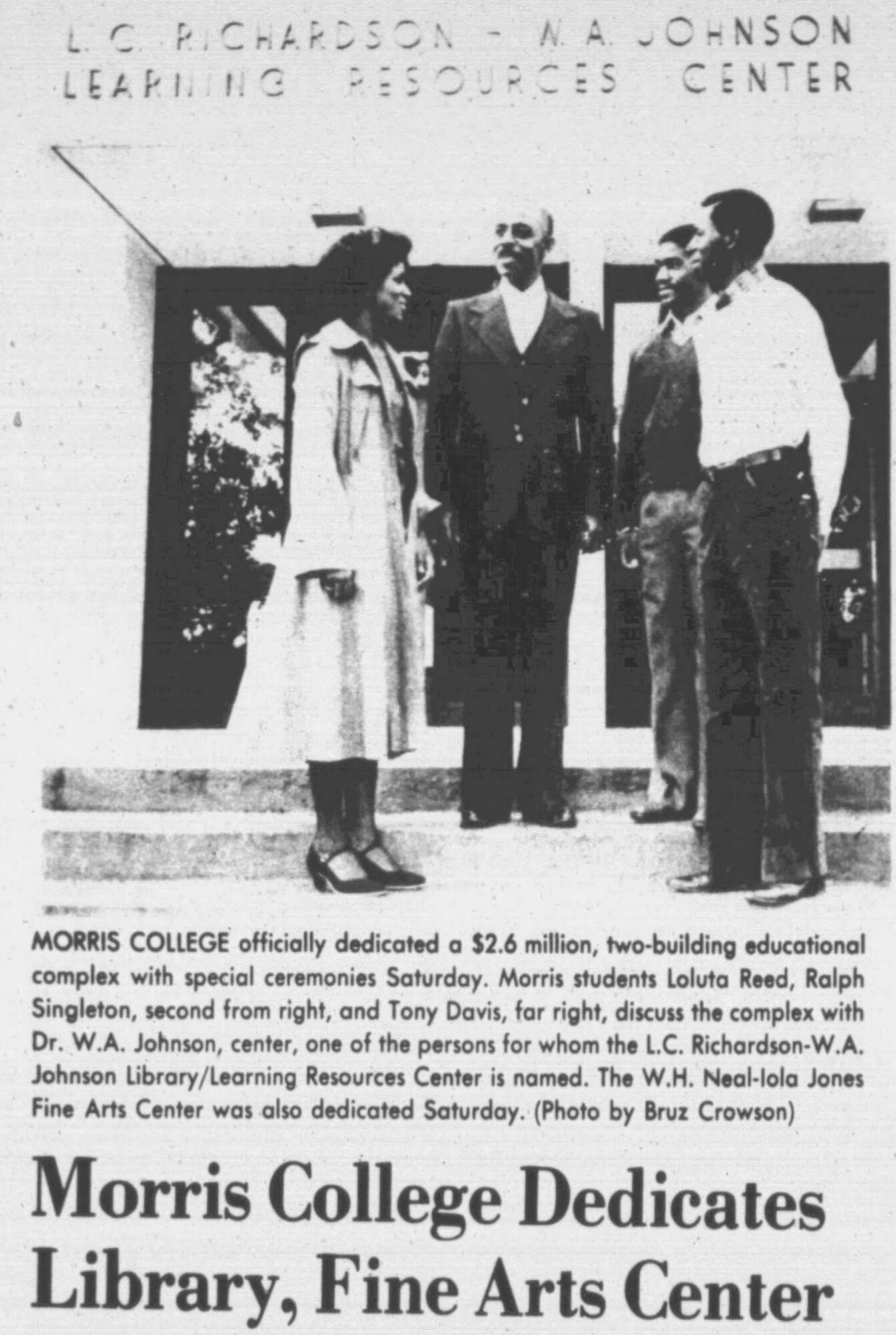
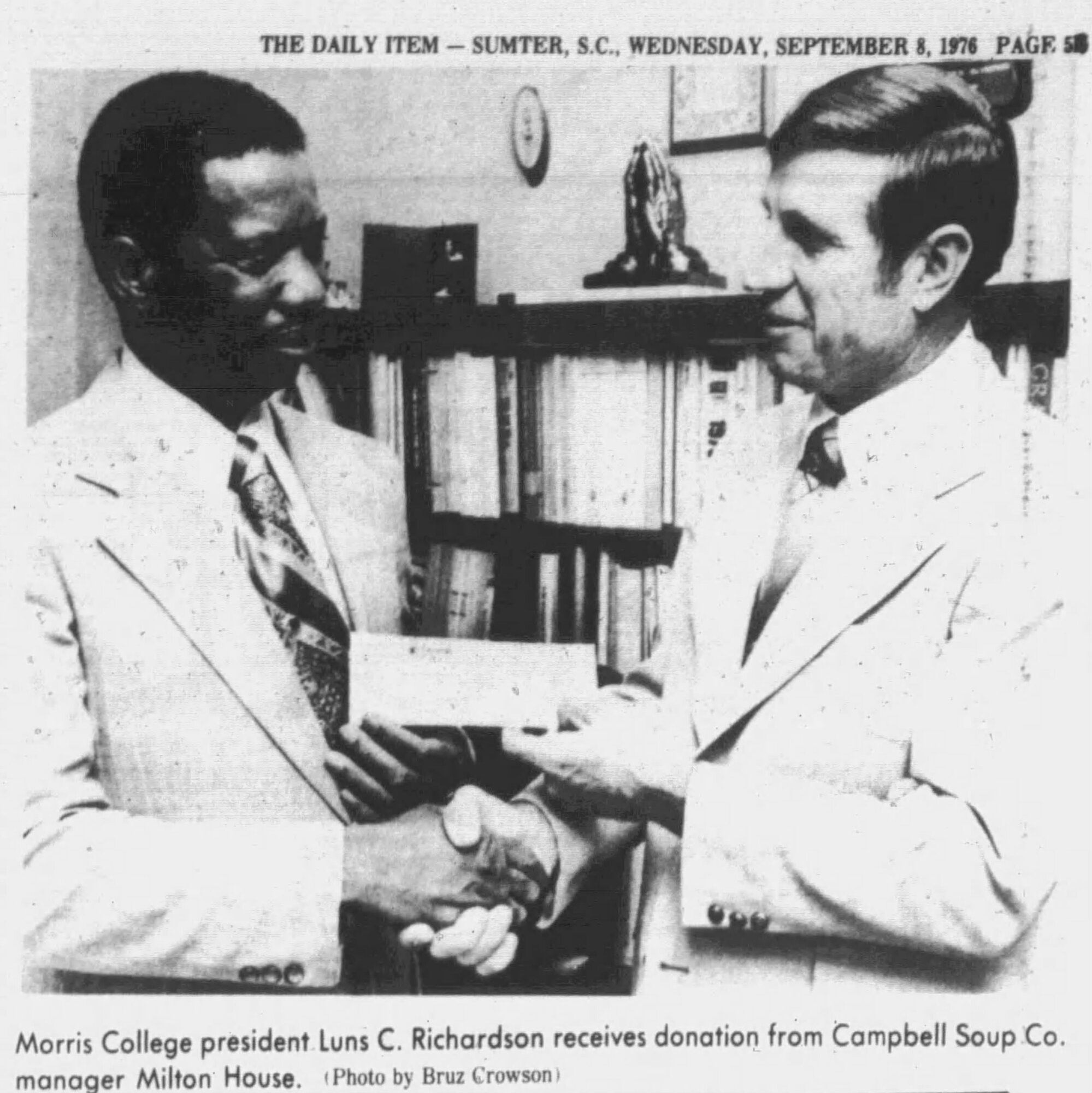
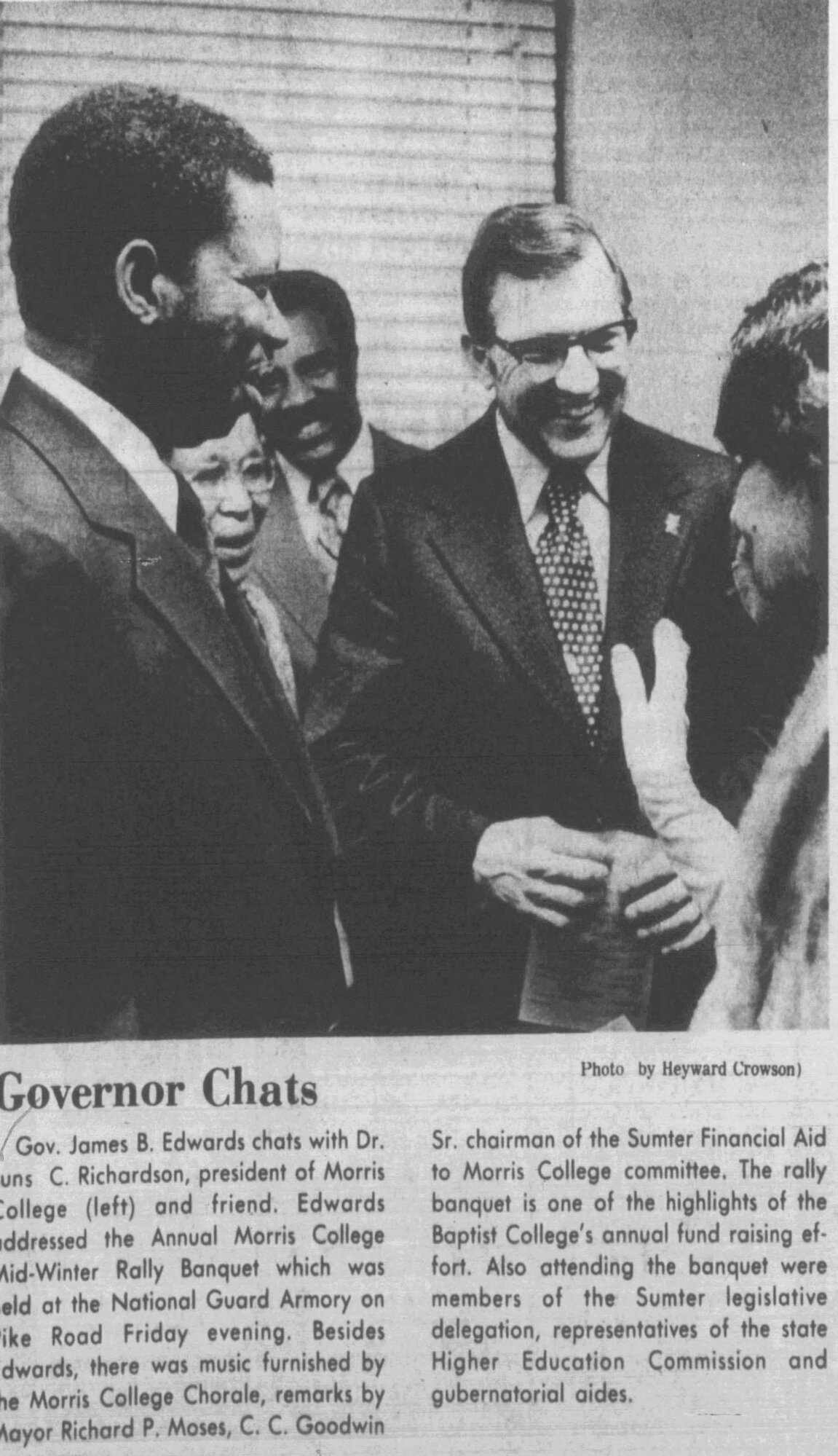
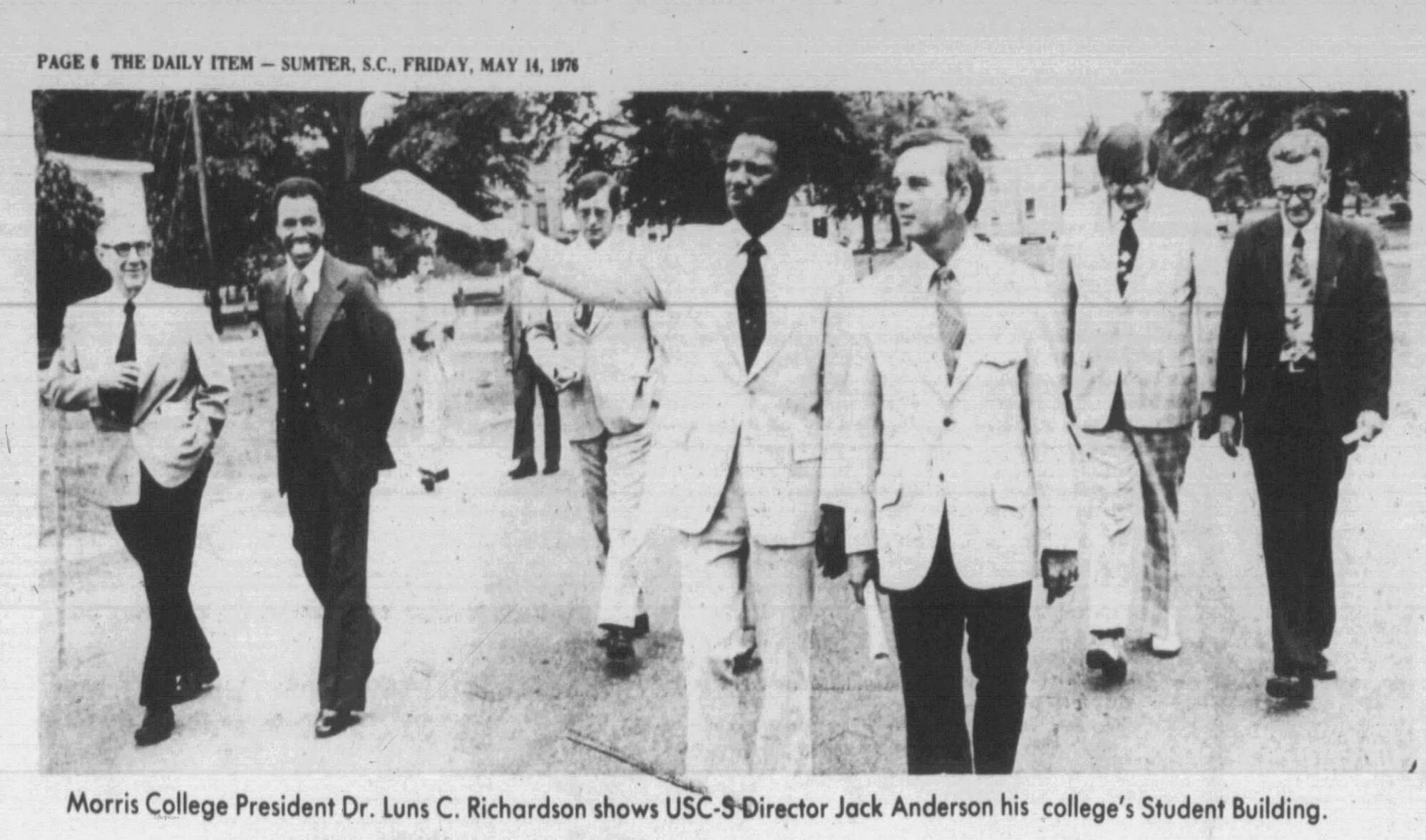
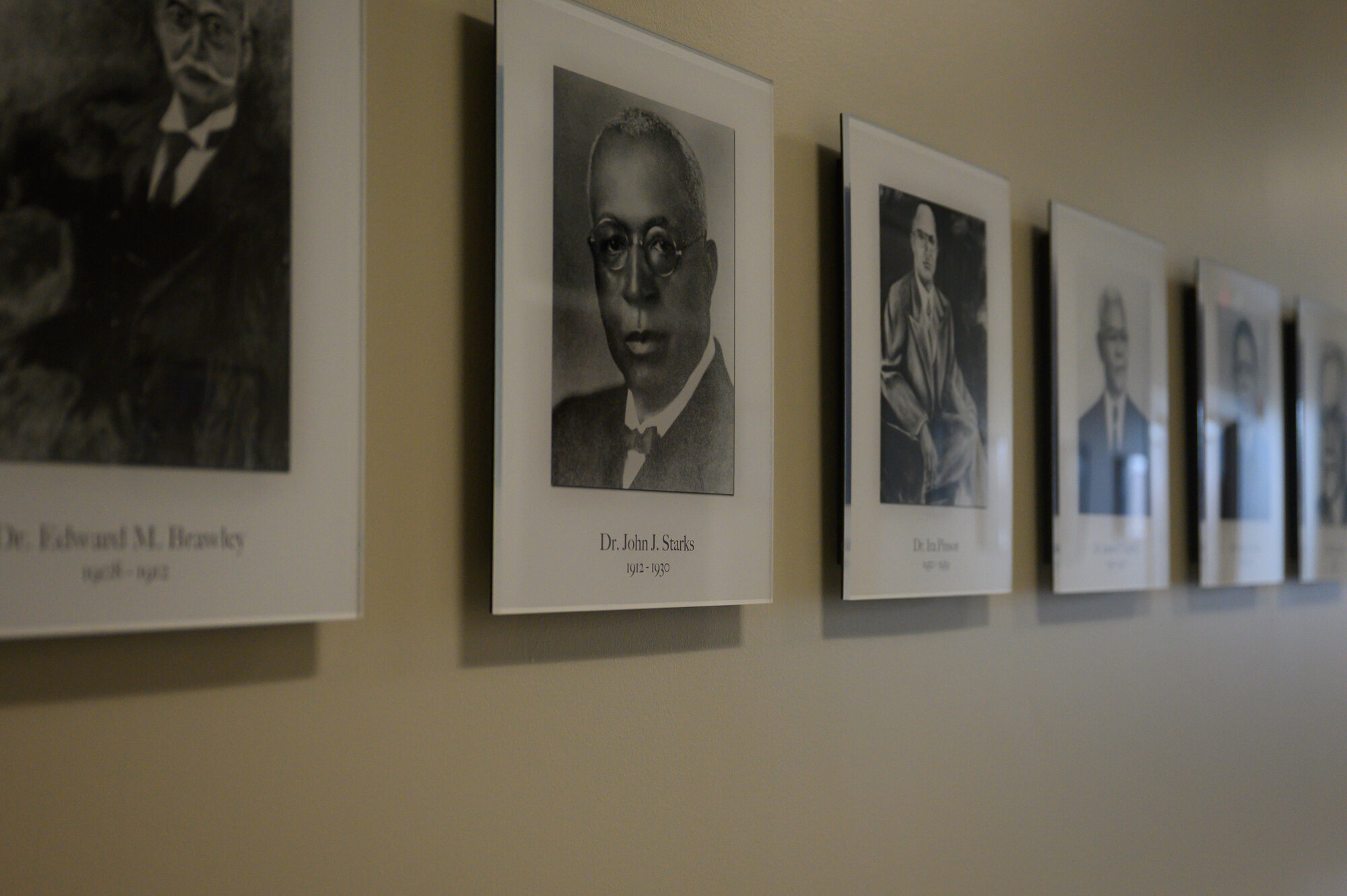
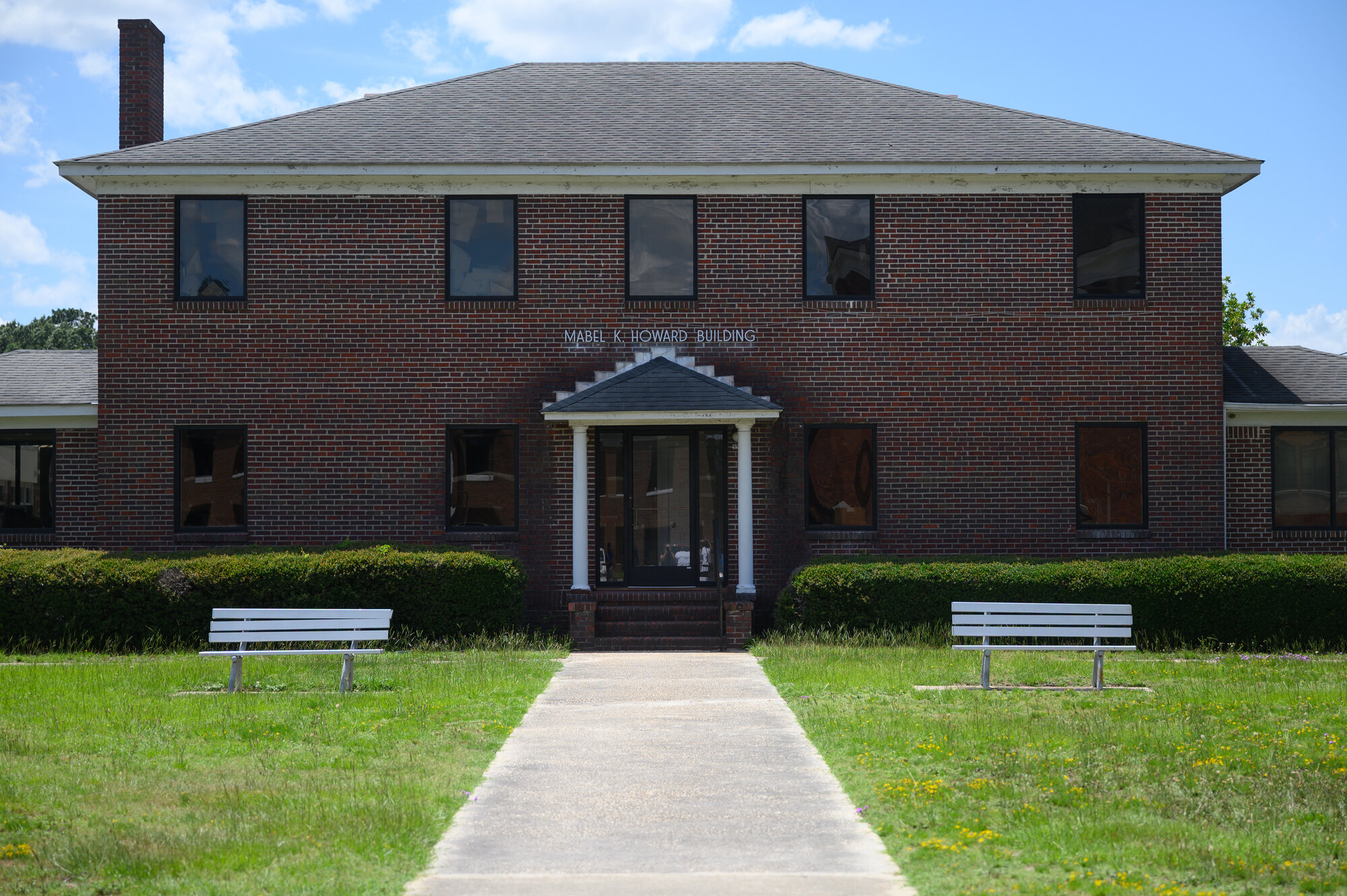
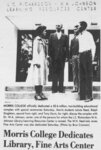
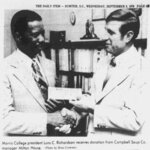
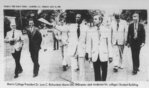
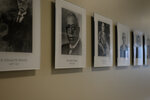
Its buildings carry the names of the men and women who served students, staff and faculty for decades. Like the late Dr. Luns C. Richardson, who served as the college's ninth president for 43 years and is credited with eliminating institutional debt, acquiring college accreditation and dramatically expanding the campus footprint. Or W. H. Neal-Iola Jones Fine Art Center, named in part after the late Dr. Iola Jones, who co-directed the financial drive of the Baptist Women for Morris College for many years and established the Baptist Women's headquarters on the college's campus in 1975. She was also director of Camp Julia A. Starks, a Christian education retreat for Baptist youth held at Morris College each summer. The list of iconic and influential figures goes on.
To Sewell, these are not simply pieces of history. They are reminders that Morris has always been built by people willing to invest in those who come after them - and he's determined to keep the momentum alive.
A native of Houston, Texas, Sewell came to Morris already immersed in the culture of HBCUs. A month shy of turning 17, he attended Morehouse College at age 16 in Atlanta, Georgia. He graduated with a political science degree before going on to earn a master's in public administration from Texas Southern University and Ph.D. in political science from Clark Atlanta University.
While at Morehouse, his professors and mentors shaped "a very young, very impressionable, very precocious" Sewell into a young man. Their belief in his skills, his tenacity, his willingness to explore beyond his comfort zone not only gave him the courage to soar to heights he never imagined, but also the strength to know when to land. With his feet planted firmly on the Morris campus, years later, and two years into his presidency, he affirmed that experience left him with a lasting belief in what HBCUs can do.
"I saw how transformative higher education has been for so many, and I saw the great history that Morris had been doing. I was just pleased to lend my efforts to that as well."
When Sewell arrived in Sumter, he did not begin his presidency in office. Rather, it started in a dorm room, living alongside the students who are treading a new path in a new place - just like him. His method had a means: to understand student life firsthand. To learn about the college through the eyes of those who walk its halls, treads its sidewalks and give the campus purpose. Rather than implement immediate changes, he decided to spend his first year listening. He met with students, faculty, staff, alumni and community members about what this college means to them and how he can be of service to preserve and expand its presence. He visited homes and listened to stories from generations of graduates, all to "feel the heart" of Morris.
The students who entered the college that year will be juniors this fall. The gravity of it never fails to amaze Sewell, as he expressed that they're "learning about Morris together."
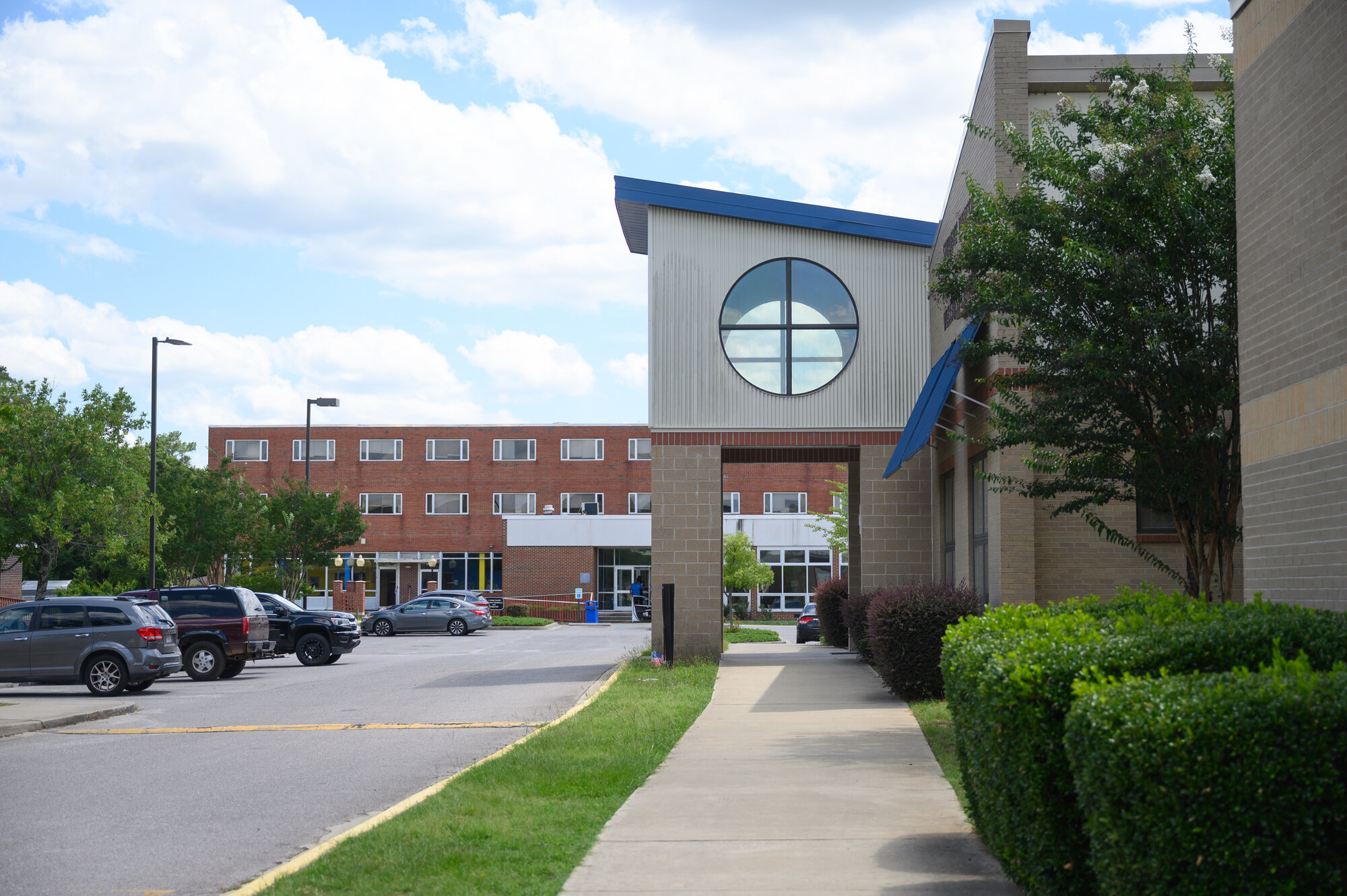
While on his "listening tour," he said, the president heard several concerns that students and staff wanted him to address, the most common being the condition of the residence hall bathrooms. Students expressed long before Sewell's arrival their disdain for the old tiles, chipped-painted walls, questionable water conditions and other issues that had stacked up over the decade. The president explained that he's not one to make promises but assured that the college would do what it could to fix the issue. With the support of the college's board and trustees, Morris gutted the residence hall bathrooms, and after a year and $1.4 million in COVID-19-related funds earmarked for higher education, students have new bathrooms, sinks, showers, tile and flooring.
The listening tour became the foundation of Morris' strategic vision, and from there, the goal became clear: elevation.
"We wanted, at the time, to elevate Morris' name, elevate the brand, elevate the enrollment, elevate our overall endowment, elevate the faculty and staff and the morale," Sewell explained. "Hence the reason why I traveled around the state talking about elevation - let's do it together. Not just me, but all of us elevating the campus together. We're very pleased that campaign and that vision has caught on."
The college has seen an improvement in retention, enrollment, the number of organizations that gather on campus, morale among faculty and the engagement of the community. And for Sewell, that's how it should be. After all, it's Sumter's college.
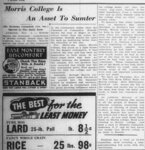
In a conversation with City of Sumter Mayor David Merchant, Sewell impressed upon him Morris' meaning to Sumter. How visitors to the city - be it large manufacturers looking to expand operations or a student planning to spend their next four years learning our corner of the state - will pass by Morris on their way into town. They'll hear about Morris as they learn about figures who have passed through its gate and went on to be one of many educating and inspiring the next generation - from students of the historic Lincoln High School becoming educators at modern-day Sumter schools to politicians who paved the way for young representatives of today. As Sumter's "front porch," their welcome to the city should be one of splendor, and Morris should be involved.
"We have been here helping to educate the community for so many years, and I tell people all the time we have done so much for so many, for so long with so few resources that it's about time that we get the attention that we deserve," Sewell expressed. "You are entering into a place where your imagination can be unleashed; you can see yourself being a cybersecurity expert. You can see yourself being a teacher or being a minister, all by coming into this new world of wonder, and so we're excited about it."
Part of that renewed attention is visible at the front of campus, where Morris and the city worked together on improvements along North Main Street. It's one of many renovations the college hopes to implement in the coming years.
Sewell has been hands-on in exploring and expanding Morris. He's gotten schooled on boilers, leaking pipes and HVAC systems only to ensure the college gets the best. He's been traveling with students and staff to share the good works of the college, hoping to interest more students to call the campus home. He's worked with staff on how to improve the retention rate and lessen the financial strain that faces students. The question of why he goes above and beyond is only met with the answer of what he told himself upon learning he was chosen as president: "This is where your destiny meets your passion."
When asked what mark he hopes to leave, he didn't wish for his name on a building or engraved in history books. He pointed to the people.
"I hope and pray that my legacy was that he was committed to the people. That he may not have been the most successful in certain areas, may not be the best preacher, may not have had all of the opportunities, but he was committed to making a difference."